所屬科目:研究所、轉學考(插大)◆普通物理學
1. An 800-N passenger in a car presses against the car door with a 200 N force when the car makes a left turn at 13 m/s. The door will pop open under a force of 800 N. Of the following, the least speed for which the passenger is thrown out of the car is: (A) 14 m/s (B) 19 m/s (C) 20 m/s (D) 26 m/s (E) 54 m/s
2. A particle is initially at rest on a horizontal frictionless table. A constant horizontal force F is applied. Which graph shows the correct plot of work W as a function of the particle speed v?
(A) I (B) II (C) III (D) IV (E) V
3. A 1.5-kg crate falls from a height of 2.0 m onto an industrial spring scale with a spring constant of 1.5×10⁵ N/m. At its greatest compression the reading on the scale is: (A) 15 N (B) 30 N (C) 1.5 × 10³ N (D) 2.1 × 10³ N (E) 3.0 × 10³ N
4. A ball of mass m, at one end of a string of length L, rotates in a vertical circle just fast enough to prevent the string from going slack at the top of the circle. The speed of the ball at the bottom of the circle is:
(A) (5gL)1/2(B) (4gL)1/2(C) (3gL)1/2 (D) (2gL1/2 (E) (gL)1/2
5. Where is the CM of the thin semicircular ring in the figure? The mass is uniformly distributed.
(A) (0, 3R/π) (B) (0, 2R/π) (C) (0, R/π) (D) (0, R/3π) (E) (0, R/2π)
6. A thin-walled hollow tube rolls without sliding along the floor. The ratio of its translational kinetic energy to its rotational kinetic energy (about an axis through its center of mass) is: (A) 1 (B) 2 (C) 3 (D) 1/2 (E) 1/3
7. The coefficient of static friction between a certain cylinder and a horizontal floor is 0.40. If the rotational inertia of the cylinder about its symmetry axis is given by I = (1/2)MR², then the maximum acceleration the cylinder can have without sliding is: (A) 0.2 g (B) 0.4 g (C) 0.8 g (D) g (E) 1.2 g
8. A 0.5 kg block attached to a spring is pulled a distance of 20 cm horizontally and released. If the period of the oscillation is 0.8 s, what is the kinetic energy of the block at t = 0.2 s? (A) 0.42 J (B) 0.62 J (C) 0.82 J (D) 1.02 J (E) 1.24 J
9. TVγ-1 is constant for an ideal gas undergoing an adiabatic process, where γ is the ratio of heat capacities CP/CV. This is a direct consequence of (A) the zeroth law of thermodynamics alone (B) the zeroth law and the ideal gas equation of state (C) the first law of thermodynamics alone (D) the ideal gas equation of state alone (E) the first law and the ideal gas equation of state
10. An ideal gas, consisting of n moles, undergoes an irreversible process in which the temperature T has the same value at the beginning and end. If the volume changes from Vi to Vf, the change in entropy is given by: (A) nR ln(Vi/Vf) (B) nR ln(Vf/Vi) (C) nR (Vf/Vi) (D) nR (Vf−Vi) (E) none of the above (entropy can't be calculated for an irreversible process)
11. Two uniform rods, each of length 2.0 m, are bent to form semicircles. One rod has a charge per unit length of 1.5 nC/m, and the other has a charge per unit length of −1.5 nC/m. The semicircles are joined to make a circle. What is the magnitude of the electric field at the center of the circle? (A) 42 N/C (B) 84 N/C (C) 34 N/C (D) 8 N/C (E) 0 N/C
12. A long, nonconducting cylinder (radius = 6.0 mm) has a nonuniform volume charge density given by αr², where α = 6.2 mC/m⁵ and r is the distance from the axis of the cylinder. What is the magnitude of the electric field at a point 2.0 mm from the axis? (A) 1.4 N/C (B) 2.8 N/C (C) 5.0 N/C (D) 3.6 N/C (E) 4.5 N/C
13. The plates of a parallel-plate capacitor of capacitance C₀ are horizontal. Into the gap a slab of dielectric material with κ = 2 is placed, filling the bottom half of the gap between the plates. What is the resulting new capacitance? (A) 2/5 C₀ (B) 3/4 C₀ (C) 2 C₀ (D) 5/2 C₀ (E) 4/3 C₀
14. If ε = 8.0 V, at what rate is that emf providing energy to the circuit shown below?
(A) 8.6 W (B) 1.2 W (C) 5.6 W (D) 13 W (E) 0.8 W
15. We find that N current loops are coplanar and coaxial. The first has radius a and current I. The second has radius 2a and current 2I, and the pattern is repeated up to the Nth, which has radius Na and current NI. The current in each loop is counterclockwise as seen from above. The magnitude of the magnetic field at the center of the loops is (A) μ₀I/2Na (B) μ₀I/Na (C) μ₀I/2a (D) μ₀NI/2a (E) μ₀NI/a
16. What is the inductance of a series RL circuit in which R = 1.0 kΩ if the current increases to one-third of its final value in 30 μs? (A) 74 mH (B) 98 mH (C) 32 mH (D) 13 mH (E) none of the above
17. Magnetic fields are produced by (A) constant electric currents (B) electric currents that vary sinusoidally with time (C) time-varying electric fields (D) all of the above (E) only ( A ) and ( B ) above
18. Boat 1 goes directly across a stream a distance L and back taking a time t₁. Boat 2 goes down stream a distance L and back taking a time t₂. If both boats had the same speed relative to the water, which of the following statements is true? (A) t₂ > t₁ (B) t₂ < t₁ (C) t₁ = t₂ (D) t₂ = 2t₁ (E) t₂ = 0.5 t₁
19. Microscopes are inherently limited by the wavelength of the light used. How much smaller (in order of magnitude) can we "see" using an electron microscope whose electrons have been accelerated through a potential difference of 50 000 V than using red light (500 nm)? (A) 2 (B) 8 (C) 5 (D) 10 (E) 16
20. The wave function ψ(x) of a particle confined to 0 ≤ x ≤ L is given by ψ(x) = Ax. ψ(x) = 0 for x < 0 and x > L. When the wave function is normalized, the probability density at coordinate x has the value (A) (2/L²) x (B) (2/L²) x² (C) (2/L³) x² (D) (3/L³) x² (E) (3/L³) x³
 阿摩線上測驗
登入
阿摩線上測驗
登入
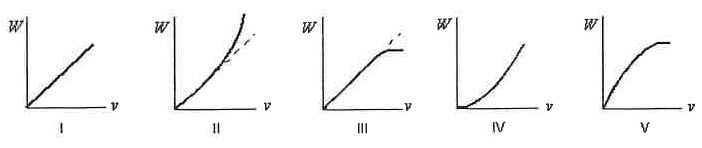 (A) I (B) II (C) III (D) IV (E) V
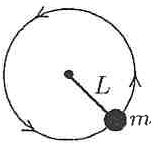 (A) (5gL)1/2(B) (4gL)1/2(C) (3gL)1/2 (D) (2gL1/2 (E) (gL)1/2
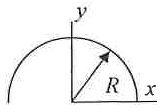 (A) (0, 3R/π) (B) (0, 2R/π) (C) (0, R/π) (D) (0, R/3π) (E) (0, R/2π)
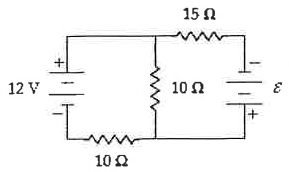 (A) 8.6 W (B) 1.2 W (C) 5.6 W (D) 13 W (E) 0.8 W