所屬科目:研究所、轉學考(插大)◆無機化學
1. The Nobel Prize in Chemistry in 2022 was awarded to click chemistry, or the azide-alkyne cycloaddition to connect two molecular fragments. For their initial discovery, what metal ion was required as a catalyst for this reaction to proceed at a milder condition? (A) Cu(I) (B) Zn(II) (C) Fe(II) (D) Fe(III) (E) Mo(II)
2. Name the following reaction: (A) Hydroformylation (B) Sigma bond metathesis (C) Hydrogenation (D) Olefin metathesis (E) Pauson-Khand reaction
3. Following Question 2, complexes based on what transition metals are used for this reaction as catalysts? (A) Fe and Co (B) Pd and Pt (C) Ni and Zn (D) Cr and Mn (E) Mo and Ru
4. Spinel structures are based on cubic closed-packed arrangements of oxide ions. How many octahedral and tetrahedral holes are there in this unit cell, respectively? (A) 1, 2 (B) 2, 4 (C) 3, 6 (D) 4, 8 (E) 5, 10
5. Following Question 4, if half of the octahedral holes and one-eighth of the tetrahedral holes are filled with Fe and Zn ions, respectively, what is the formula of the resulting oxide? (A) Zn₂FeO₄ (B) Zn₂Fe₂O₅ (C) Zn₂FeO₃ (D) ZnFe₂O₄ (E) ZnFeO₂
6. What type of reaction is usually the last step in the Born-Haber cycle? (A) Sublimation (B) Bond dissociation (C) Ionization (D) Lattice formation (E) Condensation
7. Below is a square planar Fe hydride complex that had the hydride resonance in the ¹H NMR spectrum to be −3560 ppm, what is the oxidation state of Fe? (A) 0 (B) +1 (C) +2 (D) +3 (E) +4
8. Following Question 7, what is the electron count of this complex? (A) 14 (B) 16 (C) 18 (D) 19 (E) 20
9. What is the symmetry of the following ligand group orbital (LGO) in a D₄ₕ point group?(A) A₁g (B) A₂u (C) Eu (D) A₁u (E) A₂g
10. What is the symmetry of the following vibration (i.e. torsion of two NO₂ planes)? (A) Ag (B) B₁g (C) B₂g (D) B₃u (E) Au
11. Following Question 10, is this vibration IR and Raman active/inactive? (A) IR and Raman active (B) IR and Raman inactive (C) IR active, Raman inactive (D) IR inactive, Raman active
12. Below are the bonding MOs of NH₃. Which one is the HOMO (highest occupied molecular orbital)? (A)(B)(C)(D)
13. Below are the geometric isomers of Pt(CN)₂Br₂(H₂O)₂. Which one have an optical isomer? (A)(B)(C)(D)(E)
14. Determine the point group of (square planar) tetraazidocopper(II). (A) C4v (B) C4h (C) D4h (D) D4d (E) C4
15. The magnetic moment of a green salt Kₙ[VF₆] is 2.79 μB (Bohr magneton number). What should be n? (A) 1 (B) 2 (C) 3 (D) 4 (E) 5
16. Which one of the following metal complexes has the slowest water exchange rate? (A) [V(H₂O)₆]³⁺ (B) [Ir(H₂O)₆]³⁺ (C) [Na(H₂O)₆]⁺ (D) [Ca(H₂O)₆]²⁺ (E) [Mn(H₂O)₆]³⁺
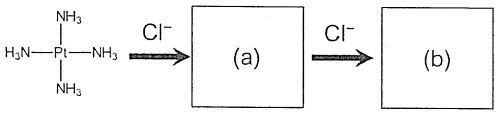
17. What would be the major product of (b)? Note: the charge of the complex ions is not shown. The oxidation states of Pt are all +2. (A)(B)(C)(D)(E)
18. How many unpaired electrons are found in [Dy(H₂O)₆]³⁺? (A) 3 (B) 4 (C) 5 (D) 6 (E) 7
19. Determine the ground state free-ion term symbol (²s⁺¹Lⱼ) of Dy³⁺. (A) ⁶H₁₅/₂ (B) ⁸S₇/₂ (C) ⁵H₄ (D) ³H₄ (E) ⁶H₅/₂
20. Rank the following complex ions in order of increasing wavelength of light absorbed: [Co(H₂O)₆]³⁺, [Co(CN)₆]³⁻, [CoI₆]³⁻, and [Co(en)₃]³⁺ (A) [Co(CN)₆]³⁻ < [Co(en)₃]³⁺ < [Co(H₂O)₆]³⁺ < [CoI₆]³⁻ (B) [Co(CN)₆]³⁻ < [CoI₆]³⁻ < [Co(en)₃]³⁺ < [Co(H₂O)₆]³⁺ (C) [CoI₆]³⁻ < [Co(en)₃]³⁺ < [Co(H₂O)₆]³⁺ < [Co(CN)₆]³⁻ (D) [Co(CN)₆]³⁻ < [Co(H₂O)₆]³⁺ < [Co(en)₃]³⁺ < [CoI₆]³⁻ (E) [CoI₆]³⁻ < [Co(H₂O)₆]³⁺ < [Co(en)₃]³⁺ < [Co(CN)₆]³⁻
(a) How many spheres (or atoms) in total does a body-centered cubic unit cell have? Draw the unit cell and show your work. (5%)
(b) Draw a simple cubic unit cell. Calculate the packing efficiency of a simple cubic unit cell. (5%)
(a) Draw a qualitative molecular orbital diagram for the complex Pd(CH₃)₄. Provide an appropriate symmetry label for each molecular orbital, and fill in the electrons. (7%)
(b) Draw a qualitative d-orbital splitting diagram for Pd(CH₃)₄ using a crystal field theory approach. Remember to label d-orbitals. (6%)
(c) Do your answers of the d-orbital splitting to parts (a) and (b) agree? Briefly explain why or why not. (2%)
(a) Zr(CH₃)₆²⁻ (3%)
(b) Fe(CO)₅ (3%)
(c) Mn(CH₃)₄{P(CH₃)₃}₂ (3%)
24. Explain why [MnF₆]³⁻ has Jahn-Teller distortion, but [Mn(CN)₆]³⁻ does not. Calculate μspin-only for both complexes. (10%)
25. The compound cisplatin, Pt(NH₃)₂Cl₂, has been studied extensively as an antitumor agent. The reaction for the synthesis of cisplatin is: K₂PtCl₄(aq) + 2 NH₃(aq) → Pt(NH₃)₂Cl₂(s) + 2 KCl(aq) Write the electron configuration for platinum ion in cisplatin. Most d⁸ transition metal ions exhibit square planar geometry. Draw the structure of cisplatin and give chemical names for cisplatin based on either Stock system or Ewing-Bassett system. (6%)
 阿摩線上測驗
登入
阿摩線上測驗
登入
 (A) Hydroformylation (B) Sigma bond metathesis (C) Hydrogenation (D) Olefin metathesis (E) Pauson-Khand reaction
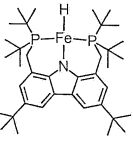 (A) 0 (B) +1 (C) +2 (D) +3 (E) +4
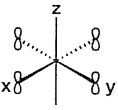 (A) A₁g (B) A₂u (C) Eu (D) A₁u (E) A₂g
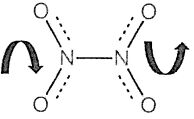 (A) Ag (B) B₁g (C) B₂g (D) B₃u (E) Au
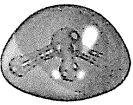 (B)
(B)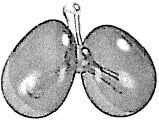 (C)
(C)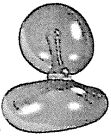 (D)
(D)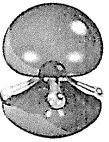
 (B)
(B) (C)
(C) (D)
(D) (E)
(E)
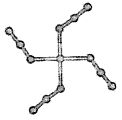 (A) C4v (B) C4h (C) D4h (D) D4d (E) C4
 (A)
(A)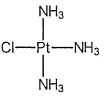 (B)
(B) (C)
(C) (D)
(D)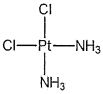 (E)
(E)