阿摩線上測驗
51.下列何者為阿片受體的affinity labeling agent?
(A)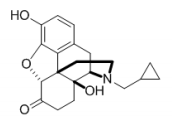
(B)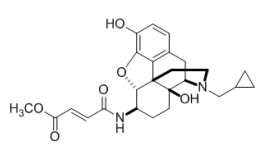
(C)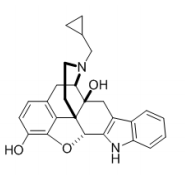
(D)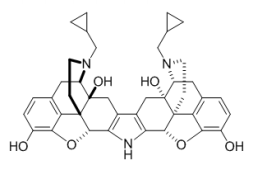
統計: A(2933), B(2847), C(1004), D(735), E(0) #1153507
詳解 (共 9 筆)
翻譯整理自國考參考書Foye’s 7th
Page. 296
不可逆酵素抑制劑有兩種:
1. Affinity labels(也稱為active site-directed irreversible inhibitors ) 2. Mechanism-based irreversible enzyme inactivators.
Affinity Labels
1. 本身為酵素的受質
2. 可以和任何酵素中的親核性基團結合(特別是催化中心部位附近的)
3. 本身為親電子性(常見基團:halo-methyl ketones (X-CH2C=O)、sulfonyl fluorides (SO2F)、nitrogen mustards [(ClCH2CH2)2NH]、diazoketones (COCHN2))
4. 治療價值低(因為其為非選擇性,因此本性上具毒性)
5. 通常用作生化研究工具(探測催化位及附近的氨基酸種類差異)
6. 經典例子為:TPCK (tosyl-phenylalanyl-chloromethyl-ketone),serine protease chymotrypsin的不可逆抑制劑
原文:
The affinity labels are those chemical entities that are inherently reactive and can target any nucleophilic group in the enzyme, especially those residing in and around the catalytic center of the protein. These agents generally resemble the substrate so that they can bind in the active site of the enzyme. In most examples, these agents also contain an electrophilic group, which includes groups such as halo-methyl ketones (X-CH2C=O, where X = halide), sulfonyl fluorides (SO2F), nitrogen mustards [(ClCH2CH2)2NH], diazoketones (COCHN2), and other such reactive groups, that can “label,” or alkylate, a nucleophilic amino acid group in the enzyme. They generally tend to be indiscriminate in their action and have little therapeutic value, because they are nonselective and, thus, inherently toxic. They have been mainly used as biochemical tools to probe active sites of enzyme to differentiate the types of amino acid groups both in and around the catalytic center of an enzyme. The classic example of an affinity label is TPCK (tosyl-phenylalanyl-chloromethyl-ketone), an irreversible inhibitor of the serine protease chymotrypsin (29). TosHNOClTPCKTosHNO
Page. 670, 671
1. 鴉片受體選擇性affinity labeling agents是分離鴉片受體類型的重要物質(所以我們才要背那麼多種)
2. 這些affinity-labeling agents都有一個可逆性結合基團,先讓affinity-labeling agents接到對的位置,再讓親電子性基團和蛋白質的親核性基團反應
原文:
Receptor Affinity Labeling Agents
A number of opioid receptor-selective affinity labeling agents (i.e., compounds that form an irreversible covalent bond with the receptor protein) have been developed. These compounds have been important in the characterization and isolation of the opioid receptor types. Each of the affinity-labeling agents contains a pharmacophore that allows initial reversible binding to the receptor. Once reversibly bound to the receptor, an affinity labeling agent must have an electrophilic group positioned so that it can react with a nucleophilic group on the receptor protein.
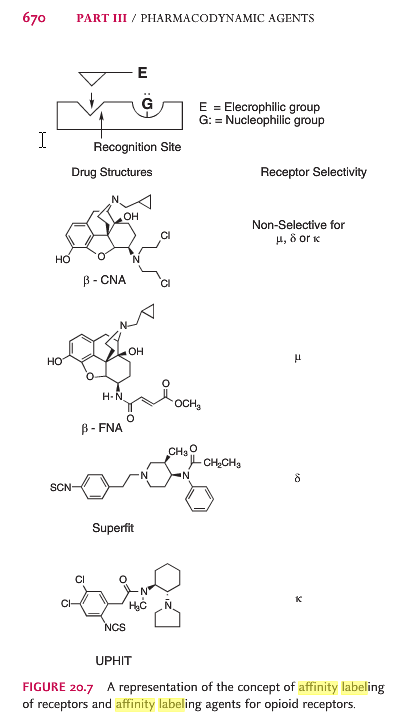
b-CAN:有2-chloroethylamine electrophilic group可和μ、δ、κ三種鴉片受體結合
b-FNA:即選項(B)fumaramide electrophilic(反應性較差)只能結合μ receptors
FIT and SUPERFIT(fentanyl series衍生物):可和μ、δ結合、但只有δ結合是不可逆