所屬科目:研究所、轉學考(插大)◆基礎分子生物學
1. How to stable the end length of chromosome? (A) Topmere (B) Endmere (C) Telomere (D) Centromere (E) Bottomere
2. What is the coding strand? (A) The DNA strand whose base sequence corresponds to the base sequence of the RNA transcript produced (B) The RNA strand whose base sequence corresponds to the base sequence of the RNA transcript produced (C) The DNA strand whose base sequence complements to the base sequence of the RNA transcript produced (D) The DNA strand whose base sequence complements to the base sequence of the RNA transcript produced (E) The cDNA strand whose base sequence complements to the base sequence of the RNA transcript produced
3. Prion is composite of what macromolecule(s)? (A) RNA (B) DNA (C) cDNA (D) Protein (E) Lipid
4. In a eukaryotic cell, when or where is the packing ratio of DNA being the highest? (A) DNA replication (B) Mitosis (C) Apoptosis (D) Euchromatin region (E) RNA transcription initiation
5. The features of a plasmid expression vector usually not including _____? (A) Replication origin (B) Antibiotic resistance gene (C) Multiple cloning site (D) Promoter (E) Telomere ?
6. In animal cells, which of the following organelles contains genetic material in addition to nucleus? (A) Golgi apparatus (B) Mitochondrion (C) Chloroplast (D) Endoplasmic reticulum (E) Lysosome
7. Which of the statements about nucleus is NOT CORRECT? (A) Structures as a double-membrane compartment (B) Containing bulk of genome (C) RNA transcription (D) DNA maintenance (E) Exosome secretion
8. What is the primary role of DNA methylation in DNA replication of E. coli? (A) The hemimethylated origin region of DNA replication are inactive for initiation (B) The methylated CpG island is important for DNA initiation of DNA replication (C) The methylation of DNA is important for restriction-modification systems (D) The methylation of origin region containing GATC sequences is important for the regulation of DNA priming (E) DNA methylation has no function in DNA replication
9. The central dogma of molecular biology including two processes: transcription and _____? (A) Reverse transcription (B) Degradation (C) Replication (D) Translation (E) Reverse replication
10. Which of the following ones does NOT happen in mRNA processing? (A) Splicing (B) Editing (C) Polyadenylation (D) All of the above (E) None of the above
11. Which of the following statements about the CRISPER-Cas9 is wrong? (A) One of the great genome-editing tools (B) A naturally occurred system in yeast (C) A guide RNA is needed (D) With the ability to change an organism's DNA (E) More efficient than other existing genome-editing methods
12.How many of the 64 possible triplets together encode stop codons? (A) 1 (B) 2 (C) 3 (D) 5 (E) 10
13.Which promoter elements of the following RNA polymerase(s) possess TATA box? (A) RNA polymerase I, II and III (B) RNA Polymerase II and III (C) RNA polymerase I (D) RNA polymerase II (E) RNA polymerase III
14. Which of the following statements is NOT CORRECT for DNA topoisomerases? (A) DNA topoisomerases can cleave DNA backbone at phosphodiester bond (B) Only participate enzymatically in overwinding, knotting and catenation of DNA (C) Relive the torsion stresses associated with DNA replication and transcription elongation (D) Both type I and II topoisomerase change the linking number of DNA (E) Human topoisomerase I is the antigen recognized by Anti-Scl-70 in scleroderma
15.Typically, protein-protein can be detected by yeast two-hybrid and co-immunoprecipitation assays as well as which of the following methods? (A) RNAi screening technology (B) Yeast one-hybrid (C) Gel mobility shift assay (D) Farwestern blotting analysis (E) CRISPER-Cas9 technology
16. Which one of the statements about amino acid is NOT TURE? (A) The essential amino acid is due to that they can not be produced from other compounds of human body (B) There are 10 proteinogenic amino acid are called "essential" (C) Amino acids have both the amine and the carboxylic acid groups attached to the first (alpha-) carbon. (D) There are about 500 naturally occurring amino acid (E) Only 20 amino acid appear in the genetic code
17. Which one of the statements about heterochromatin is NOT CORRECT? (A) It is often tightly packed form of DNA (B) There are facultative heterochromatin and constitutive heterochromatin and both play a role in the expression of genes (C) Heterchromatin has been associated with the di- and tri-methylation of H3K19 in certain portions of the genome (D) Euchromatin and heterochromatin could be distinguished cytologically by how intensively they are stained, and typically heterochromatin stains intensely while euchromatin is less intense (E) Heterochromatin consists mainly of genetically inactive satellite sequences
18. Which of the following macromolecules have catalyst function in the biological system? (A) RNA (B) Protein (C) Lipid (D) Carbohydrate. (E) Fatty acid
19. Which of the following is INCORRECT about the inactive state of the Ras protein? (A) Cell proliferation activation (B) Gene mutation leads to cancer development (C) Changes conformation when bound to regulatory molecules (D) GDP bound form (E) The G1 motif of the five G motifs binds to GDP
20. Which of the following types of resistance is not provided by the plasmid for its host? (A) Antibiotics resistance (B) Heat resistance (C) Toxic resistance (D) Phage infection (E) Heavy metals
21. Which of the following chemical bonds are involved in the stabilization of two proteins in one complex? (A) H-bond (B) Ionic bond (C) Van der Waals (D) Salt bridge (E) Peptide bond
22.Allosteric control of O2 binding is present in hemoglobolin but not myoglobin. This is because hemoglobin protein has (A) Quaternary structure (B) Tertiary structure (C) Secondary structure (D) Changes in conformation of subunit after oxygen binding (E) Iron
23.An enzyme is a catalyst for a specific reaction by (A) decreasing ΔG (B) decreasing ΔΗ (C) decreasing ΔG‡(intermediate) (D) decreasing S (E) increasing the reaction rate
24. Which of the following amino acids have UV absorption (A) Glycine (B) Cysteine (C) Aspartic Acid (D) Tyrosine (E) Tryptophan
25. Which of the following amino acids is basic in the physiological condition? (A) Aspartic acid (B) Asparagine (C) Tryptophan (D) Lysine (E) Arginine
26.Choose the CORRECT statement describing peptide bond in a polypeptide (A) It has the resonance of π electrons in double bond. (B) It is in planar structure (C) It is freely rotate to give flexibility in stretching. (D) Two peptide bonds have free rotation next to each other. (E) A peptide bond formation involves the conjugation between –COOH and –NH2
27. Which of the following gene transcripts of RNA polymerase II in eukaryotic cells? (A) 45S ribosomal RNA (B) Glyceraldehyde dehydrogenase mRNA (C) (D) U6 snRNA (E) β-actin mRNA
28. E. coli does not express β-galactosidase when its growth medium contains glucose, because (A) CAP is not activated for DNA binding to promote transcription initiation of β-Galactosidase gene. (B) Glucose stimulates the expression of lac repressor. (C) Lac repressor binds to the lac operator sequence. (D) Glucose interferes with lactose binding with the lac repressor. (E) Glucose binds to Lac operator
29. Which of the following restriction enzymes when used to completely digest an E. coli genomic DNA sample would generate DNA fragments in average size of 256 bp. (A) Not I: GC/GGCCGC (B) Hind III: A/AGCTT (C) Hpa II: C/CGG (D) Hpa I: GTT/AAC (E) Alul AG/CT
30. Which of the following amino acids are in the zinc finger motif? (A) Tryptophan (B) Histidine (C) Cysteine (D) Tyrosine (E) Leucine
31. Restrition enzymes cut DNA double helix to generate: (A) 5'-protruding ends (B) 3'-protruding ends (C) blunt ends (D) one 5'-protruding end and one blunt end (E) one 3'-protruding end and one blunt end
32. During mitosis, the nuclear membrane of a cell: (A) disappears temporarily (B) does not disappear (C) disappear permanently (D) disappears partially (E) disappears randomly
33. Mutations in a gene could generate (A) a polypeptide with amino acid changes (B) a polypeptide with no amino acid changes (C) a shorter peptide (D) a longer peptide (E) two shorter peptides
34. Eukaryotic translation of mRNAs is processed in (A) nucleus (B) mitochondria (C) cytosol (D) ER (E) Golgi
35. Which one of the following amino acids can form covalent bonds with other amino acids? (A) lysine (B) valine (C) cystein (D) alanine (E) proline
36. Which of the following is used as the substrate by DNA polymerase during DNA replication? (A) nucleotide diphosphate (B) nucleotide triphosphate (C) nucleotide monophosphate (D) nucleotide diphosphate and triphosphate (E) nucleotide monophosphate and triphosphate
37. Prior to cell fractionation, cells may be ruptured by placing them in (A) sonicator (B) high speed blender (C) an isotonic solution (D) an hypotonic solution (E) an hypertonic solution
38. Each of the 20 different aminoacyl-tRNA synthetases (A) links an amino acid to the 3' terminus of tRNA molecule (B) links an amino acid to the 5' terminus of mRNA molecule (C) recognizes multiple amino acids (D) requires ATP to catalyze reactions (E) sometimes make mistakes
39. The ribosome (A) is an enzyme complex made entirely of protein molecules (B) directs elongation of polypeptides (C) is organized into 4 subunits whose sizes are designated in Svedburg (S) units (D) is not used by cell that secrete large amount of proteins (E) contains RNA
40. Which of the following methods can separate particles based on density? (A) affinity chromatography (B) SDS polyacrylamide gel chromatography (C) ion exchange chromatography (D) gel filtration chromatography (E) centrifugation
 阿摩線上測驗
登入
阿摩線上測驗
登入
阿摩線上測驗
登入
阿摩線上測驗
登入
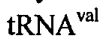 (D) U6 snRNA (E) β-actin mRNA