所屬科目:研究所、轉學考(插大)-有機無機
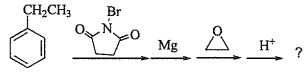
1. What is the major product of the following reaction sequence? (2 pts) (A) (B)(C) (D) (E)
2. In the following sequence of reactions, Which of butene isomers contain(s) NO deuterium? (2 pts) (A) cis-2-butene (B) trans-2-butene (C) cis-2-butene and trans-2-butene (D) 1-butene (E) None of the above
3. Which compounds are named correctly? (2 pts) (A)Ⅰ,Ⅱ,Ⅲ;(B) Ⅳ,V,VI; (C)Ⅱ,IV,V; (D)Ⅲ,IV,VI; (E)VI,I,V.
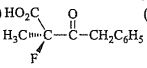
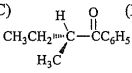
4. Which ofthe following compound(s) would undergo racemization in the presence of base? (2 pts) (A)(B) (C) (D) (E)
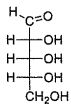
5. A pyranose form is a cyclic hemiacetal with a six-membered ring. Which of the following compounds cannot exist in a pyranose form? (2 pts) (A) (B) (C) (D)(E)
6. Which of the compound can produce a secondary amine with the treatment of LiAIH4 in diethyl ether followed by H2O? (2 pts)(A) (B)(C) (D) (E)
7. Based on the low-resolution proton NMR spectrum of a particular compound shown at the right, which of the following is(are) true? (2 pts) I. There are at least three different types of protons in this compound. Il. There are more protons of the type cotresponding to peak 3 than the type corresponding to peak 1. III. Protons of the type corresponding to peak 2 are more shielded than those corresponding to peak l. (A) I only (B) II only (C) III only (D) I and II only (E) I, II, and III.
8.Which of the following is the strongest base? (2 pts)(A)(B)(C)(D)(E)
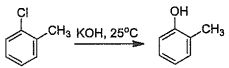
9. Which of the following is a suitable synthesis of o-methylphenol? (2 pts)(A)(B)(C)(D)(E)
10. Which is the major product of the following reaction? (2 pts) (A)C6H5OH (B)(C)(D)(E)
11. The following compound has four aromatic rings. Rank them in terms of increasing reactivity toward electrophilic aromatic substitution. (2 pts) (A)D
13. Which diene can be used to prepare the following product by alkene metathesis? (2 pts) (A)(B)(C)(D)(E)
15. On the basis of molecular orbital theory and Huckel's rule, which molecules and/or ions should be aromatic? (2 pts) (A)I and V (B) III and VIII (C) IV, VII and IX (D)IV, VI, VII and IX (E) II and IV
18. How many of the following point groups do NOT have an inversion center? (3 pts) (a) CI (b) Ci, (c) C2 (d) (e) (f) S6 (g) S8 (h)Ih K (i) O(j)Oh (A)4(B)5 (C)6(D)7 (E)8
19. The anion shows only a single '9F NMR peak over a wide temperature range (ignoring coupling to ). Which geometry is consistent with this data? (3 pts) (A) Trigonal bipyramidal (B) square pyramidal (C) pentagonal planar (D) cubic (E) None of the above
第二大題:問答題(共55分) Part II: Questions and Answers (Please provide an adequate answer to each of the following questions; Total 55 points) 21. Provide a mechanism for the following transformation. Please show all arrow pushing. (6 pts)
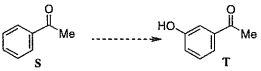
22. Provide a synthesis that will selectively convert S to T. Show all of the key intermediates and furnish all of the important reagents. Hint: This is not a one-step process. (8 pts)
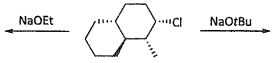
23. Consider both regioselectivity and stereosclectivity to predict the products for the eliminations below, and draw complete mechanisms. (6 pts)
 阿摩線上測驗
登入
阿摩線上測驗
登入
 (A)
(A)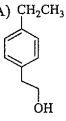 (B)
(B)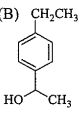 (C)
(C) (D)
(D) 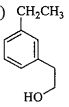 (E)
(E)
 Which of butene isomers contain(s) NO deuterium? (2 pts)
(A) cis-2-butene
(B) trans-2-butene (C) cis-2-butene and trans-2-butene
(D) 1-butene
(E) None of the above
Which of butene isomers contain(s) NO deuterium? (2 pts)
(A) cis-2-butene
(B) trans-2-butene (C) cis-2-butene and trans-2-butene
(D) 1-butene
(E) None of the above (A)Ⅰ,Ⅱ,Ⅲ;(B) Ⅳ,V,VI; (C)Ⅱ,IV,V; (D)Ⅲ,IV,VI; (E)VI,I,V.
 (B)
(B) 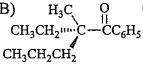 (C)
(C)
 (D)
(D)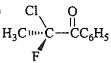 (E)
(E) 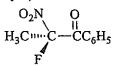
 (B)
(B) 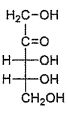 (C)
(C) 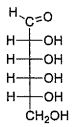 (D)
(D)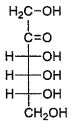 (E)
(E) 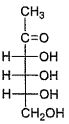
 (B)
(B) (C)
(C)  (D)
(D) (E)
(E)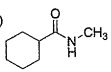
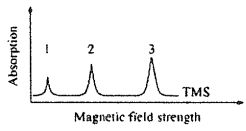 (A) I only (B) II only (C) III only (D) I and II only (E) I, II, and III.
  (B)
(B) (C)
(C) (D)
(D) (E)
(E)
 (B)
(B)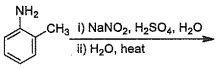 (C)
(C)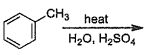 (D)
(D)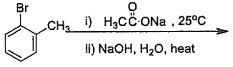 (E)
(E)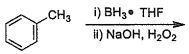
 (A)C6H5OH (B)
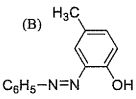 (C)
(C)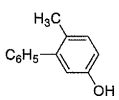 (D)
(D)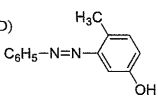 (E)
(E)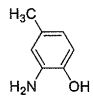
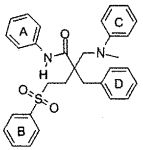 (A)D
(A)D (A)
(A) (B)
(B)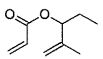 (C)
(C)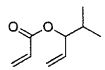 (D)
(D)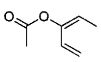 (E)
(E)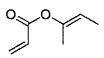
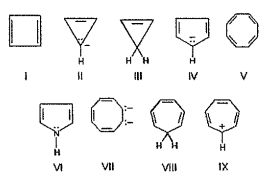 (A)I and V
(B) III and VIII
(C) IV, VII and IX
(D)IV, VI, VII and IX
(E) II and IV
(A)I and V
(B) III and VIII
(C) IV, VII and IX
(D)IV, VI, VII and IX
(E) II and IV (e)
(e)  (f) S6 (g) S8 (h)Ih K (i) O(j)Oh (A)4(B)5 (C)6(D)7 (E)8
 shows only a single '9F NMR peak over a wide temperature range (ignoring coupling to
 ). Which geometry is consistent with this data? (3 pts)
(A) Trigonal bipyramidal (B) square pyramidal (C) pentagonal planar (D) cubic (E) None of the above
). Which geometry is consistent with this data? (3 pts)
(A) Trigonal bipyramidal (B) square pyramidal (C) pentagonal planar (D) cubic (E) None of the above