阿摩線上測驗
登入
首頁
>
全民英檢◆中級◆聽力(GEPT Listening)
>
114年 - 全民英檢中級聽力測驗第十回#125972
> 試題詳解
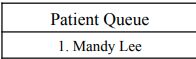
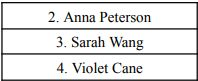
34.
(A) Mandy Lee
(B) Anna Peterson
(C) Sarah Wang
(D) Violet Cane
答案:
登入後查看
統計:
A(2), B(27), C(4), D(0), E(0) #3411333
詳解 (共 1 筆)
MoAI - 您的AI助手
B1 · 2025/09/22
#6771254
為了能夠提供詳細的解答說明,首先需要假設...
(共 848 字,隱藏中)
前往觀看
0
0
相關試題
A. Question 1 1.
#3411300
B. Question 2 2.
#3411301
3.
#3411302
4.
#3411303
D. Question 5 5.
#3411304
6.(A) I'll get you some hot soup. (B) Yes, it is circle-shaped. (C) I bumped into Kelly yesterday. (D) Of course. Here you are.
#3411305
7. (A) It's in front of that temple. (B) You should do some research first. (C) She always cares much about this issue. (D) I'm greatly inspired by this book.
#3411306
8. (A) I'm happy you've finally reached your goal. (B) I wish you could tell me what happened. (C) You bet. I hope everything will go well. (D) Yeah, I'm used to taking a walk regularly.
#3411307
9. (A) I go to school by bus every day. (B) This is such a meaningful event. (C) Sure. Please follow me. (D) I like the meat stew the best.
#3411308
10. (A) Just leave it to me. (B) What are you doing? (C) How about this one? (D) Are you coming?
#3411309
相關試卷
114年 - 全民英檢中級聽力測驗第十回#125972
2025 年 · #125972
114年 - 全民英檢中級聽力測驗第九回#125971
2025 年 · #125971
114年 - 全民英檢中級聽力測驗第七回#125970
2025 年 · #125970
114年 - 全民英檢中級聽力測驗第六回#125968
2025 年 · #125968
114年 - 全民英檢中級聽力測驗第五回#125966
2025 年 · #125966
114年 - 全民英檢中級聽力測驗第四回#125960
2025 年 · #125960
114年 - 全民英檢中級聽力測驗第三回#125956
2025 年 · #125956
114年 - 全民英檢中級聽力測驗第二回#125955
2025 年 · #125955
114年 - 全民英檢中級聽力測驗第一回#125951
2025 年 · #125951
114年 - 全民英檢中級聽力測驗第八回#125949
2025 年 · #125949
 阿摩線上測驗
登入
阿摩線上測驗
登入