阿摩線上測驗
登入
首頁
>
研究所、轉學考(插大)◆化學(含普通化學、有機化學)
>
109年 - 109 亞洲大學_學士後招生考試_獸醫學系:化學(含普通化學、有機化學)#101267
> 試題詳解
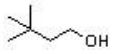
39. What is the major product of the following reaction?
(A)
(B)
(C)
(D)
答案:
登入後查看
統計:
尚無統計資料
相關試題
1. A student performs an experiment to determine the density of a sugar solution. She obtains the following results: 4.71 g/mL, 4.73 g/mL, 4.67 g/mL, 4.69 g/mL. If the actual value for the density of the sugar solution is 4.40 g/mL, which statement below best describes her results? (A) Her results are precise, but not accurate. (B) Her results are accurate, but not precise. (C) Her results are both precise and accurate. (D) Her results are neither precise nor accurate.
#2775372
2. What answer should be reported, with the correct number of significant figures, for the following calculation? (249.362 + 41) / 63.498 (A) 4.6 (B) 4.57 (C) 4.573 (D) 4.5728
#2775373
3. Write the name for Ca3(PO4)2. (A) calcium (III) phosphite (B) calcium (II) phosphite (C) calcium phosphate (D) tricalcium phosphorustetraoxide
#2775374
4. Give the correct formula for aluminum sulfate. (A) Al2SO4 (B) Al(SO4)3 (C) Al3(SO4)2 (D) Al2(SO4)3
#2775375
5. Determine the empirical formula for a compound that contains C, H and O. It contains 51.59% C and 35.30% O by mass. (C: 12.0 g/mol; H: 1.00 g/mol; O:6.0 g/mol) (A) C2H6O (B) CHO (C) (D) CH4O3
#2775376
6. Give the theoretical yield, in grams, of CO2 from the reaction of 4.000 moles of with 4.000 moles of O2. (C: 12.0 g/mol; H: 1.00 g/mol; O: 16.0 g/mol) (A)112.7 g (B)102.4 g (C)176.0 g (D)704.0 g
#2775377
7. The titration of 25.0 mL of an unknown concentration H2SO4 solution requires 83.6 mL of 0.12 M LiOH solution. What is the concentration of the H2SO4 solution (in M)? (A) 0.20 M (B) 0.40 M (C) 0.10 M (D) 0.36 M
#2775378
8. How many subshells are there in the shell with n = 4? (A) 3 (B) 4 (C) 6 (D) 18
#2775379
9. How many valence electrons does an atom of C have? (A) 1 (B) 4 (C) 2 (D) 3
#2775380
10. Place the following in order of increasing radius. Ca2⁺ S2⁻ Cl⁻ (A)(B) (C) (D)
#2775381
相關試卷
111年 - 111 亞洲大學_學士後獸醫學系招生考試試題:化學(含普通化學、有機化學)#113453
2022 年 · #113453
110年 - 110 國立中山大學_碩士暨碩士專班招生考試_海科系碩士班選考:化學#104398
2021 年 · #104398
110年 - 110 亞洲大學_學士後招生考試_獸醫學系︰化學(含普通化學、有機化學)#100317
2021 年 · #100317
109年 - 109 亞洲大學_學士後招生考試_獸醫學系:化學(含普通化學、有機化學)#101267
2020 年 · #101267
108年 - 109 學士後招生考試_獸醫學系:化學(含普通化學、有機化學)#106047
2019 年 · #106047
106年 - 106 亞洲大學_學士後獸醫學系招生考試試題_學士後獸醫學系:化學(含普通化學、有機化學)#125411
2017 年 · #125411
 阿摩線上測驗
登入
阿摩線上測驗
登入
阿摩線上測驗
登入
阿摩線上測驗
登入