 阿摩線上測驗
68.攝護腺癌病人以gonadotropin releasing hormone(GnRH)agonist作為荷爾蒙去勢療法,最適合的療效監
測參數為何?
(A)血中LH濃度
(B)血中FSH濃度
(C)血中PSA濃度
(D)血中testosterone濃度
答案:登入後查看
統計: A(126), B(174), C(628), D(1623), E(0) #3197766
統計: A(126), B(174), C(628), D(1623), E(0) #3197766
詳解 (共 7 筆)

簡單巧克力
#6145098
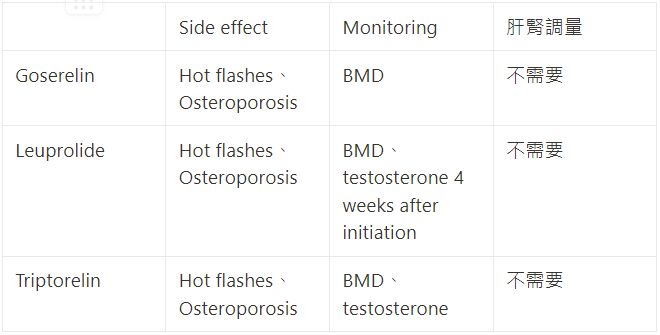
LHRH agonists
- 在有Metastatic disease的病人上,使用LHRH agonist的患者可能在1周後會出現疾病Flare up情況
- 通常在通常在2 weeks後會緩解
- 可搭配Antiandrogen使用2-4 weeks來減少 Flare up
- 增加Osteoporosis、骨折的風險
- 需在使用ADT治療的1年內監測BMD
- 給予Vitamin D or calcium的補充
- 已經有骨質疏鬆的男性應該要使用Antiresorptive agent
ㅤㅤ
Ref:DiPiro’s Pharmacotherapy: A Pathophysiologic Approach, 12th Edition
28
1



枕枕的角角
#6168878
化學去勢可以練辟邪劍法嗎?
2
4

軒
#6130880
- Hormone therapy: The hormone testosterone boosts cancer cell growth. Hormone therapy uses medications to combat testosterone’s role in fueling cancer cell growth. The medicines work by preventing testosterone from reaching cancer cells or by reducing your testosterone levels. Alternatively, your provider may recommend surgery to remove your testicles (orchiectomy) so they can no longer make testosterone. This surgery is an option for people who don’t want to take medications.
Hormone therapy for prostate cancer
Hormone therapy for prostate cancer typically uses different medications that block hormones from connecting with cancerous cells. In some instances, hormone therapy involves surgery to remove one or both testicles (orchiectomy). Medications may include:
- Abiraterone acetate: This medication keeps prostate cancer cells from making androgens. Androgens are hormones such as testosterone that help people enter puberty and mature physically. This treatment may help people who have prostate cancer that hasn’t responded to other hormone therapy or who have prostate cancer that’s likely to come back after treatment.
- Luteinizing hormone-releasing hormone (LHRH) agonists: LHRH agonists work by telling your pituitary gland to stop making luteinizing hormones. This hormone stimulates people’s testicles to release testosterone. Certain cancerous cells rely on testosterone to grow. Without a steady supply of testosterone, those cells stop growing.
- Antiandrogens: Like luteinizing hormones, antiandrogens reduce how much testosterone people produce.
Ref:
ㅤㅤ
Degarelix competitively inhibits GnRH receptors in the pituitary gland, preventing the release of luteinizing hormone (LH) and follicle stimulating hormone. Reduced LH suppresses testosterone release, which slows the growth and reduces the size of prostate cancers.
ㅤㅤ
ㅤㅤ
ㅤㅤ
2
4