 阿摩線上測驗
題組內容
1.(50 points) The convolutional layer is the core building block of a Convolutional Neural Network (CNN), which is widely used in
today's machine learning methods to classify images and recognize speeches. For example, the figure below shows a CNN which
contains two convolutional layers. The first convolutional layer applies 4 learnable filters (or kernels) to the input image and
produces 4 feature maps.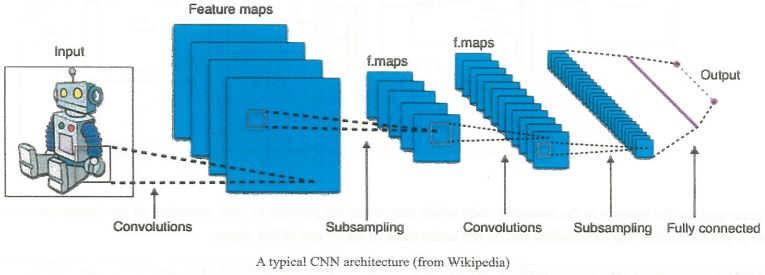 Although the above example uses 2-dimensional convolutions, let us start with I-dimensional convolution here for simplicity.
The convolution of two 1-dimensional finite sequences is defined by as the following:
Although the above example uses 2-dimensional convolutions, let us start with I-dimensional convolution here for simplicity.
The convolution of two 1-dimensional finite sequences is defined by as the following:
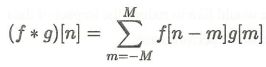
where the symbol * denotes a convolution operator, fis the input sequence, and g is the convolution kernel of size (2M+1).
Suppose the input sequence fin our case study contains N data points, and each data point is represented by a 32-bit floating-point
number. The convolution kernel g is also composed by 32-bit floating-point numbers.
Please answer the following questions: