6. (3 points) A randomized quick sort works as follows. For ease of discussion we assur me that the sequence
we want to sort, K = (k1,... .,kn), is a pernutution of 1 to n. We randomly and uniformly pick a key
& from K. Then we partition K into two subsets - Ki that has keys less than k and K1 that has keys
greater than k. Then we recursively sort K1and K2, and combine the results with k to get the sorted
sequence.
1. The number of key comparisons will always be max aunized when the keys in K are already sorted.
2. Let |K1| and|K2|be the number of keys in K1 and K2 respectively. The expected value of
max(|K1|,|K2|) is  n.
n.
3. The algorithm will compare two keys &: and ky at most ouce, so the numnber of key comparisons is
O(n2).
4. The probability that the algorithm will compare ky and ly (n2i> jZ 1) is 
5. Let P= {(i,j)|1≤i,,j ≤ni≠j}. The expected total number of key comparisons is 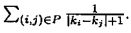
 阿摩線上測驗
登入
阿摩線上測驗
登入