 阿摩線上測驗
III. Analytical calculations and concepts
9. Assume that the conjugate base, X. of an acid can react simultaneously with 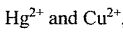 , forming 1:1 complexes that exhibit absorption maxima at 255 nm and 620 nm, respectively. Their molar absorptivity (L/mol-cm) values are as follows:
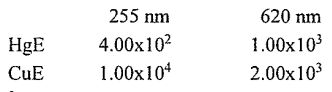
A solution sample of 10.0 mL containing 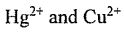 was obtained. It was treated with an excess of
  and no ions other than
 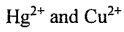 absorb at 255 nm and 620 nm. Following the treatment, the solution is diluted to 100.0 mL before conducting spectroscopic measurements. The measurements display an absorbance of 0.600 at 255 nm and 0.350 at 620 nm when measured in a 1.00-cm cell. (a) Calculate the molar concentrations of
 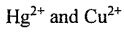 + in the sample. (b) The spectrophotometric measurements are often limited by the indeterminate errors associated with the spectrophotometer used. A detailed theoretical
and experimental study showed that the errors on the precision of concentration measurements fall into three categories: (1)independent of T, (2) proportional to the square root of T2+T, and (3) proportional to T. (i) Discuss the main sources of error and
their relations to the quality and components of spectrophotometers. (ii) Sketch with proper labels a plot of relative concentration error vs. absorbance for the three categories of error and state how absorbance is affected. (10%)