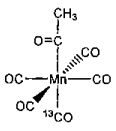
所屬科目:研究所、轉學考(插大)◆無機化學
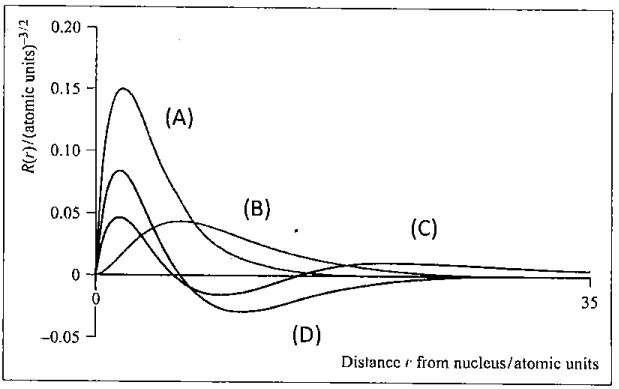
1. Which one of the following functions is the 3p radial wave function of an H atom?
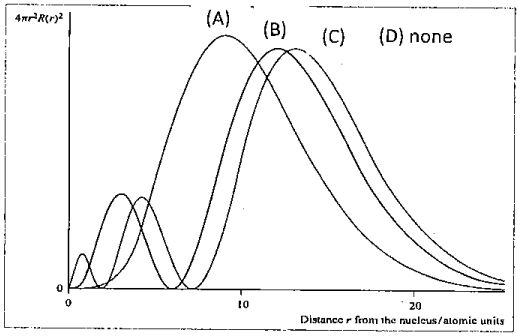
2. Which one of the following functions is the 3d radial distribution function of an H atom?
3. The ground state electron configuration of an element is shown. What is this element? (A) Sb (B) Sc (C) Se (D) Si (E) Sn
4. The image below describes the periodic trend of (A) the first ionization energies (B) atomic radii (C) electron affinities (D) Pauling electronegativities (E) none of the above
5. What is the shape of XeF₄? (A) trigonal pyramidal (B) tetrahedral (C) square planar (D) trigonal bipyramidal (E) octahedral
6. Which one of the following functions is the wave function of a sp hybridized orbital of an atom? (A) (1/2)1/2(ψ(s) + ψ(p)) (B) (1/3)1/2ψ(s) - (1/6)1/2ψ(px) + (1/2)1/2ψ(py) (C) (1/3)1/2ψ(s) - (1/6)1/2ψ(px) - (1/2)1/2ψ(py) (D) (1/2)(ψ(s) + ψ(px) + ψ(py) + ψ(pz)) (E) (1/2)(ψ(s) + ψ(px) - ψ(py) - ψ(pz))
7. Which one of the following linear combination of atomic orbitals does not form a bonding interaction? (A) (B) (C) (D) (E)
8. Consider eclipsed form ferrocene. Which one of the following is not a symmetry element of the molecule. (A) E (B) C (C) σ (D) i (E) S
9. Identify the point group of allene (C₃H₄). (A) C₂h (B) C₂v (C) D₂ (D) D₂h (E) D₂d
10. How many molecular orbitals will BH₃ have? Consider the orbitals containing the valence electrons only. (A) 4 (B) 5 (C) 6 (D) 7 (E) 8
11. Which one of the following does not have a bent structure? (A) BeH₂ (B) BH₂ (C) CH₂ (D) NH₂ (E) OH₂
12. A crystal has the following cell parameters:a ≠ b ≠ c, α = β = γ = 90°It belongs to the crystal system: (A) triclinic (B) orthorhombic (C) hexagonal (D) cubic (E) tetragonal
13. What is the coordination number of an atom in a hexagonal close-packed structure? (A) 3 (B) 4 (C) 6 (D) 8 (E) 12
14. The unit cell of diamond is shown. How many C atoms can be found in the cell? (A) 8 (B) 12 (C) 16 (D) 18 (E) 20
15. All the following compounds have rock-salt structure. Which one of them has the smallest lattice enthalpy? (A) LiF (B) NaCl (C) KI (D) MgO (E) SrO
16. Which one of the following has the most negative pKa value? (A) B(OH)₃ (B) H₂CO₃ (C) H₃PO₄ (D) H₂SO₄ (E) HClO₄
17. Which one of the following has the highest molar solubility? (A) NaF (B) NaCl (C) AgCl (D) NaI (E) AgI
18. Which one of the following is classified as a soft acid? (A) Ca²⁺ (B) Cl⁻ (C) Co³⁺ (D) Cr⁶⁺ (E) Cu⁺
19. Which one of the following has the smallest dipole moment? (A) acetonitrile (B) benzene (C) dichloromethane (D) ethanol (E) tetrahydrofuran
20. Which one of the following cannot be a stable compound? (A) B₂H₆ (B) C₂H₆ (C) C₄H₆ (D) P₂H₆ (E) Si₂H₆
21. Which one of the following has the most positive standard Gibbs energy of formation? (A) CH₄ (B) C₂H₆ (C) SiH₄ (D) GeH₄ (E) SnH₄
22. Which one of the following ions shows the strongest reducing capability by its metallic form? (A) Ag⁺ (B) Al³⁺ (C) Fe²⁺ (D) K⁺ (E) Zn²⁺
23. What is the diagram called?(A) Frost diagram (B) Latimer diagram (C) Ellingham diagram (D) Energy level diagram (E) ORTEP diagram
24. From the last question, what is the value of E⁰? (A) -0.182 V (B) 0.182 V (C) -0.158 V (D) 0.158 V (E) none of the above
25. SF₆ has A₁g, Eg, and T₁u stretching vibrational modes. The A₁g mode is (A) IR active, Raman active (B) IR inactive, Raman active (C) IR active, Raman inactive (D) IR inactive, Raman inactive (E) none of the above
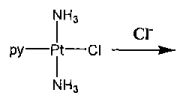
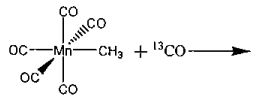
26. What would be the product from the following reaction?(A) (B) (C) (D)(E)
27. What is the term symbol for the ground state of Ce³⁺? (A) ⁵S (B) ³D (C) ⁷G (D) ³P (E) ²F
28. Which of the following complexes would undergo Jahn-Teller distortion? (A) [Cr(en)]³⁺ (B) [Mn(H₂O)₆]²⁺ (C) [Ni(H₂O)₆]²⁺ (D) [Cu(H₂O)₆]²⁺ (E) [Zn(H₂O)₆]²⁺
29. Determine which of the following metal complexes is diamagnetic. (A) [Cr(en)]³⁺ (B) [Ni(NH₃)₄]²⁺ (C) [CoCl₄]²⁻ (D) [Fe(CN)₆]⁴⁻ (E) [Cu(H₂O)₆]²⁺
30. Which one of the following solid is not considered to be a semiconductor? (A) AlAs (B) GaN (C) InN (D) Si (E) ZnS
31. Which one of the following complexes displays the lowest CO stretch frequency? (A) [Fe(CO)₄]²⁻ (B) [Ni(CO)₄] (C) [Cr(CO)₆] (D) [Pt(CO)₄]²⁺ (E) [Mo(CO)₆]
32. How many unpaired electrons are found in the metal complex [Co(H₂O)₆]²⁺? (A) 0 (B) 1 (C) 2 (D) 3 (E) 4
33. Which one of the following metal complexes has highest Δoct? (A) [MnF₆]³⁻ (B) [Fe(ox)₃]³⁻ (C) [Cr(NH₃)₆]³⁺ (D) [Ni(H₂O)₆]²⁺ (E) [Fe(CN)₆]³⁻
34. Which one of the following complexes has magnetic moment (μeff) very close to 3.9 μB? (A) [V(NH₃)₆]Cl₃ (B) [Cr(NH₃)₆]Cl₃ (C) [Zn(H₂O)₆]²⁺ (D) [Cu(H₂O)₆]²⁺ (E) [Ni(H₂O)₆]²⁺
35. What is the structure of the metal complex [Cu(py)₄]Cl? (A) square planar (B) trigonal bipyramid (C) tetrahedral (D) square pyramid (E) octahedral
36. What is most abundant transition metal ion in a human body? (A) Fe (B) Co (C) Ni (D) Cu (E) Zn
37. Which one of the following complexes displays lowest water exchange rate? (A) [Cr(H₂O)₆]³⁺ (B) [Mn(H₂O)₆]²⁺ (C) [Ni(H₂O)₆]²⁺ (D) [Cu(H₂O)₆]²⁺ (E) [Zn(H₂O)₆]²⁺
38. Which metal complex could not be chiral? (A) [Ni(pph)₂]Cl (B) [Cr(acac)₃] (C) [Co(en)₃]³⁺ (D) [Co(ox)₃]³⁻ (E) [Ru(en)₃]²⁺
39. Which one compound does not obey 18-electron rule? (A) Cr(CO)₆ (B) [(η⁵-C₅H₅)₂Co]⁺ (C) [Ir(CO)(PPh₃)Cl] (D) CIMn(CO)₅ (E) Co₂(CO)₈
40. What is the catalyst using for the following reaction? CH₃OH + CO → CH₃COOH (A) Co(CO)₄⁻ (B) Rh(CO)₃H (C) [Ru(bpy)(CO)(CO)]⁺ (D) [Rh(PPh₃)₃Cl] (E) [PdCl₄]²⁻
41. How many isomers could the metal complex [Co(NH₃)₄Cl₂]Cl have? (A) 1 (B) 2 (C) 3 (D) 4 (E) 5
42. Which one of the following fragment is isolobal with a neutral CH₂ fragment? (A) Mn(CO)₅ (B) Fe(CO)₄ (C) Co(CO)₄ (D) Ni(CO)₃ (E) CpNi
43. What structure type does the carborane C₃B₆H₆ belong to? (A) closo (B) nido (C) arachno (D) hypho (E) klado
44. Which one of the following ligands can be used as a π acceptor? (A) en (B) NH₃ (C) CO (D) Cl⁻ (E) H₂O
45. Which one of the following ligands is classified as a soft ligand? (A) OH⁻ (B) NH₃ (C) CO₃²⁻ (D) I⁻ (E) RO⁻
46. What is the OS₄ core structure in OS₄(CO)₁₆? (A) square (B) planar raft (C) tetrahedron (D) square pyramid (E) butterfly
47. Which one of the following reactions would undergo inner-sphere electron transfer? (A) [Co(NH₃)₆]Cl²⁺ + [Cr(OH)₂]³⁺ (B) [Os(bpy)₃]²⁺ + [Mo(CN)₈]⁴⁻ (C) [Fe(CN)₆]⁴⁻ + [Fe(phen)]₃³⁺ (D) [Ru(NH₃)₆]²⁺ + [Co(phen)]³⁺ (E) [Fe(phen)]²⁺ + [Fe(phen)]³⁺
48. What would be the product from the following reaction? (A) (B)(C)
49. What is the metal-metal bond order in the complex of [Os₂Cl₈]²⁻? (A) 1 (B) 2 (C) 3 (D) 4 (E) 5
50. Cisplatin cis-[PtCl₂(NH₃)₂] acts as an anti-tumor drug. What is its main interaction in vivo? (A) binding with protein (B) binding with lipid (C) binding with DNA (D) binding with sugar (E) blocking ion absorption
 阿摩線上測驗
登入
阿摩線上測驗
登入
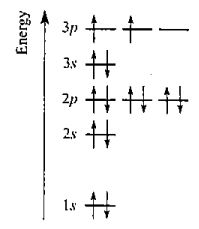 (A) Sb (B) Sc (C) Se (D) Si (E) Sn
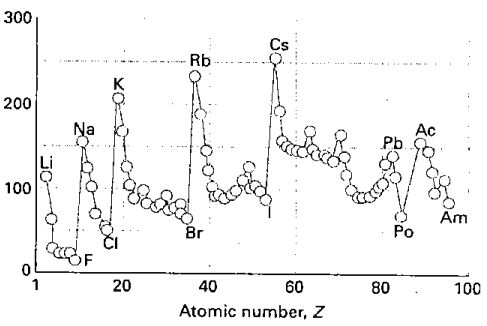 (A) the first ionization energies (B) atomic radii (C) electron affinities (D) Pauling electronegativities (E) none of the above
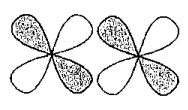 (B)
(B) 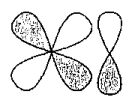 (C)
(C)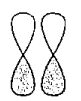 (D)
(D)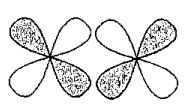 (E)
(E)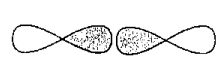
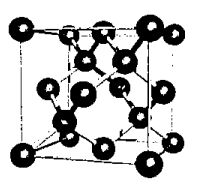 (A) 3 (B) 4 (C) 6 (D) 8 (E) 12
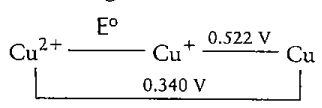 (A) Frost diagram (B) Latimer diagram (C) Ellingham diagram (D) Energy level diagram (E) ORTEP diagram
 (A)
(A) 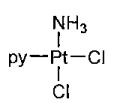 (B)
(B) 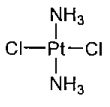 (C)
(C)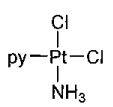 (D)
(D)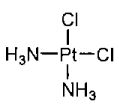 (E)
(E) 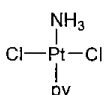
 (A)
(A) 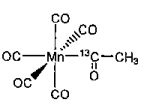 (B)
(B)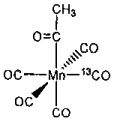 (C)
(C)