所屬科目:研究所、轉學考(插大)◆通信原理
(2) (6 %) Suppose that the continuous-time Fourier transform of x(t) is X(jω). What is the Fourier transform of Re(x(-2t+3) I where Tef ; means taking the real part?
(b) (6%) [cos(πt) +sin(4πt)+ cos(10πt)]* sinc(21) (* means the continuous convolution)
(b)(6%)
(a) (5%) What does the unique decodability mean? Assume that a code has the property thatfor each . Is the code uniquely decodable?
(b) (5%) A class of codes called the prefix-free codes can be decoded with no delay (hence sometimes also called instantareous codes). What is the definition for the prefix-free codes? Every prefix-free code for the alphabet 9X with its codeword lengths must satisfy the Kraftinequality. What is the Kraft inequality? Assume that a code with its codeword lengths satisfies the Kraft inequality. Is it uniquely decodable? Does a uniquely decodable code have to satisfy the Kraft inequality?
(c) (10%) Use the Hufiman algorithm to construct a prefix-free code for the above mentioned DMS. What is the associated average length? Clearly state your coding strategy.
(b) (10%) Derive the optimal symbol error probability when using the signal space diagram given in Figure I b in terms of the average symbol energy, No, and the Q-function,
(c) (5%) Given an arbitrary M-ary modulation scheme with the minimum distance, derive a union upper bound for the symbol error probability in terms of and the Q-function.
(d) (5%) Since the minimun distance of a constellation dominates the performance of a modulation scheme, one would desire a signal diagram with the same minimum distance constraint that has smaller average symbol energy. Please design a 7-ary signal diagram on the I/Q-constellation with = 2 and its average symbol energy no larger than 3.43. red
 阿摩線上測驗
登入
阿摩線上測驗
登入
 (* means the discrete convolution and 4[n] is the unit step function)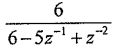
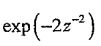
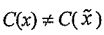 for each
  . Is the code uniquely decodable?
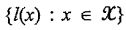 must satisfy the Kraftinequality. What is the Kraft inequality?
  ? Clearly state your coding strategy.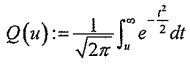
 , derive a union upper bound for the symbol error probability in terms of
  constraint that has smaller average symbol energy. Please design a 7-ary signal diagram on the I/Q-constellation with