所屬科目:學士後◆化學
5.Which of the following are acceptable Lewis structures, including formal charges, for nitric acid, HNO3? (A)A only (B)B only (C) C only(D)both B and C
6.Which atomic orbital combination would result in a molecular sigma bond? (A)(B)(C)(D)
7.How many carbon-carbon σ bonds are present in the molecule shown?(A)2 (B)3 (C) 4(D)5
8.How many π bonds are present in the molecule shown?(A)0 (B)1 (C) 3(D)4
9.Vildagliptin is a recently released antidiabetic drug (J. Med. Chem. 2010, 7902). How many elements of unsaturation are in Vildagliptin?(A)4 (B)5 (C) 6(D)7
10. In the structure below, the hybridization of the oxygen is ________ and the C-O-C bond angle is ________. (A)sp2; 120° (B)sp2; <109.5° (C) sp3; 120°(D)sp3; <109.5°
11. The structure below is a potent analgesic agent (pain reliever) (J. Med. Chem., 2009, 5685). How many secondary carbons are in this structure?(A)2 (B)4 (C) 6(D)12
20. What is the structural relationship between the two molecule shown below?(A)constitutional isomers (B)enantiomers (C) diastereomers(D)conformational isomers
21. How many asymmetric carbon atoms are present in the molecule shown?(A)0 (B)1 (C) 2(D)3
23. Which of the following structures are achiral and meso?(A)1 (B)2 (C) 3(D)4
29. Identify the correct name for the following structure.(A)3-methoxy-5-methylcyclohepta-1,5-diene (B)6-methoxy-1-methylcyclohepta-1,4-diene (C) 7-methoxy-5-methylcyclohepta-1,4-diene(D)4-methoxy-2-methylcyclohepta-1,5-diene
30. For which of the following alkenes will cis- and trans- isomers not exist?(A)a) only (B)b) only (C) both a) and c)(D)d) only
35. Provide the reagents necessary to complete the following transformation.(A)1. BH3∙THF 2. H2O2, HO- (B)H2O, H2SO4 (C) OsO4, H2O2(D)CH3CO3H
37. What is the correct IUPAC name for the following structure?(A)(Z) 4-methyl-3-hexen-1-thiol (B)(Z) 6-mercapto-3-methylhex-3-ene (C)( E ) 6-mercapto-3-methylhex-3-ene(D)( E ) 4-methylhex-3-en-1-thiol
41. What are the relative integrations for the 1H NMR signals for the following compound?(A)3:1:2:2 (B)3:3:2 (C) 3:1:4(D)5:3
51. The standard cell potential ( ) for the reaction below is +0.63 V. At 25 °C, the cell potential for this reaction is ________ V when [Zn2+ ] = 3.0 M and [Pb2+ ] =2.0✖10-4M.
Pb2+(aq) + Zn (s) → Zn2+(aq) + Pb (s) (A)0.51 (B)0.86 (C) 0.40(D)0.75
52. The first law of thermodynamics can be given as ________. (A)ΔE = q + w (B)(C) for any spontaneous process, the entropy of the universe increases (D) the entropy of a pure crystalline substance at absolute zero is zero
61. The Henderson-Hasselbalch equation is ________. (A) (B) (C)(D)
69. The equilibrium constant for the gas phase reactionis Keq = 4.34 × 10⁻³ at 300 °(C) At equilibrium, ________. (A)products predominate (B)reactants predominate (C) roughly equal amounts of products and reactants are present(D)only products are present
70. Consider the following reaction at equilibrium:
Le Châtelier's principle predicts that the moles of in the reaction container will increase with ________. (A)some removal of from the reaction vessel (V and T constant) (B)a decrease in the total pressure (T constant) (C) addition of some to the reaction vessel (V and T constant) (D) a decrease in the total volume of the reaction vessel (T constant)
 阿摩線上測驗
登入
阿摩線上測驗
登入
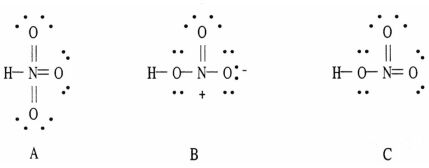 (A)A only (B)B only (C) C only(D)both B and C
 (B)
(B) (C)
(C) (D)
(D)
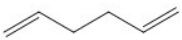 (A)2 (B)3 (C) 4(D)5
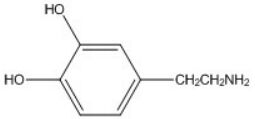 (A)0 (B)1 (C) 3(D)4
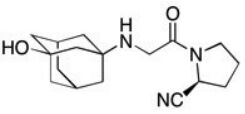 (A)4 (B)5 (C) 6(D)7
 (A)sp2; 120° (B)sp2; <109.5° (C) sp3; 120°(D)sp3; <109.5°
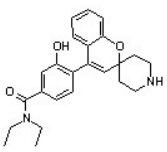 (A)2 (B)4 (C) 6(D)12
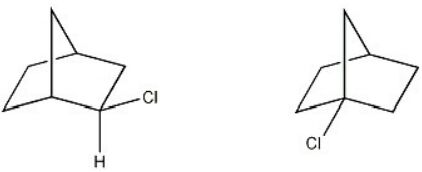 (A)constitutional isomers (B)enantiomers (C) diastereomers(D)conformational isomers
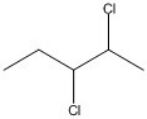 (A)0 (B)1 (C) 2(D)3
 (A)1 (B)2 (C) 3(D)4
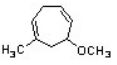 (A)3-methoxy-5-methylcyclohepta-1,5-diene (B)6-methoxy-1-methylcyclohepta-1,4-diene (C) 7-methoxy-5-methylcyclohepta-1,4-diene(D)4-methoxy-2-methylcyclohepta-1,5-diene
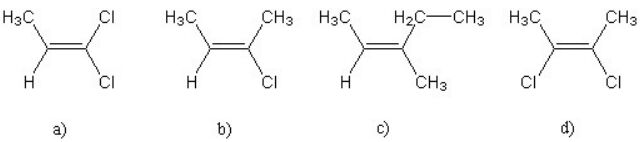 (A)a) only (B)b) only (C) both a) and c)(D)d) only
 (A)1. BH3∙THF 2. H2O2, HO- (B)H2O, H2SO4 (C) OsO4, H2O2(D)CH3CO3H
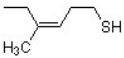 (A)(Z) 4-methyl-3-hexen-1-thiol (B)(Z) 6-mercapto-3-methylhex-3-ene (C)( E ) 6-mercapto-3-methylhex-3-ene(D)( E ) 4-methylhex-3-en-1-thiol
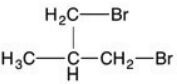 (A)3:1:2:2 (B)3:3:2 (C) 3:1:4(D)5:3
 (C) for any spontaneous process, the entropy of the universe increases (D) the entropy of a pure crystalline substance at absolute zero is zero
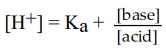 (B)
(B)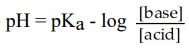 (C)
(C)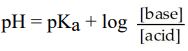 (D)
(D)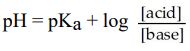

 Le Châtelier's principle predicts that the moles of in the reaction container will increase with ________. (A)some removal of from the reaction vessel (V and T constant) (B)a decrease in the total pressure (T constant) (C) addition of some to the reaction vessel (V and T constant) (D) a decrease in the total volume of the reaction vessel (T constant)