阿摩線上測驗
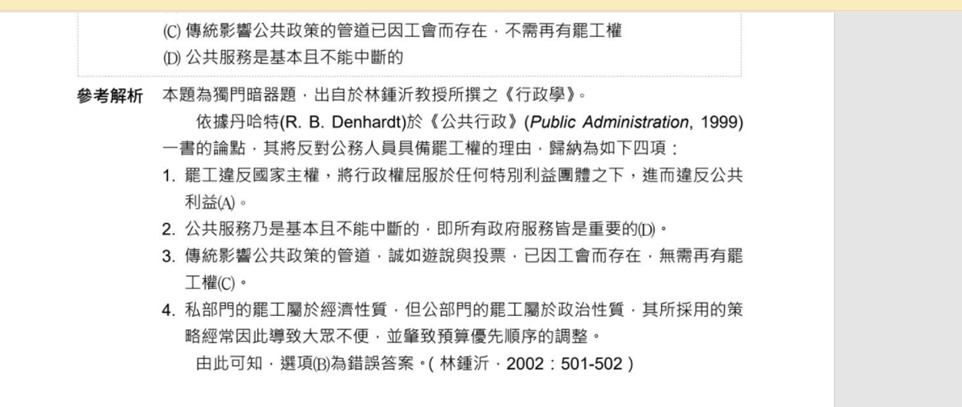
14. 有關反對公務人員具罷工權的主張,丹哈特(R. B. Denhardt)歸納出 4 項理由,下列何者有誤?
(A)罷工違反國家主權,將行政權威屈服在任何特別利益團體之下
(B)公務人員應忠誠執行政府政策,不應有反對立場
(C)傳統影響公共政策的管道已因工會而存在,不需再有罷工權
(D)公共服務是基本且不能中斷的
統計: A(1081), B(5057), C(2993), D(277), E(0) #2332046
詳解 (共 9 筆)

(A)公共部門具有唯一主權原則不能受迫於某一特殊團體!
(B)(C)由以下資料得知,可以有反對立場亦有罷工權!but有跟沒有一樣,因為身分關係!!
原本更小的罷工權就再被限縮到更小了!
(D)公共服務即人民的基本權益直接影響所以不能中斷!
公私部門團體協商之差異
(A)公共部門具有唯一主權原則(sovereignty doctrine)(不能受迫於某一特殊團體而釋放管理權或與該團體分享權力)、提供的產品與勞務具有獨佔性質(monopolistic goods and services)以及(D)須顧及公共利益( public interest)(衛民,民88:279-280)等特性。
公部門與私部門的團體協商權不同處可大致區分如下:
(一)簽訂拘束力合約之不同
在私部門方面,私部門的單一管理特質,使工會能與單一的雇主進行對等協商並訂定有效合約。然而在政府部門中,由於機關領導階層仍需對上級長官、立法部門以及納稅者負責,因此在公共利益之考量下,往往受制於民意壓力與法定預算之限制,故在現實考量下,較不可能與公務人員協會在談判桌上簽訂有拘束力的合約(尤其是經濟性的議題)。
(二)行使協商權與罷工權之不同
罷工是一般工會員工作為最終權力的手段。然而,大部份國家之公部門公務人員至目前為止尚無法被允許進行合法的罷工行動。其主要的原因是公務人員與國家之權力關係之不同,且罷工對民眾接受公共服務的基本權益具有直接的影響,而公務人員在身份上,亦受法律保障,故往往以公共利益為名,從而(B)(C)限縮其團體協商權及罷工權之行使。
以下為參考資料來源!
#團體協商 #公務人員協會法 #團體協約
公務人員協商權之研究 - 國家政策研究基金會
Read more: https://www.npf.org.tw/2/4925
感謝張朝瑋的指教!!
你想要知道丹哈特本人說了什麼,這種求知欲非常好!令我佩服!
丹哈特他沒說到反對公務人員罷工!!沒錯沒這個字眼!! 那他也沒有說到不能反對!!應該沒錯吧~
(B)公務人員應忠誠執行政府政策,不應有反對立場
而是說公共利益應該怎樣~公務人員應該怎樣~
我上面解答資料來源也包涵丹哈特他的文章,
因此我也去找了他的文章來,最後內容大致可分為七點:
1. Serve, rather than steer. An increasingly important role of the public servant is to help citizens articulate and meet their shared interests, rather than to attempt to control or steer society in new directions.
服務而不是操縱。公務員角色是幫助公民表達和滿足他們的共同利益,而不是試圖控制或引導社會向新的方向發展。
(A)罷工違反國家主權,將行政權威屈服在任何特別利益團體之下
2. The public interest is the aim, not the by-product. Public administrators must contribute to building a collective,shared notion of the public interest. The goal is not to find quick solutions driven by individual choices.Rather, it is the creation of shared interests and shared responsibility
公共利益才是目的,它不是副產品。公共管理者必須建立起集體的、公共利益共享的概念。目標不是被個人所驅使而去尋找快速解決方案,而是共享利益與責任的產物。
(C)傳統影響公共政策的管道已因工會而存在,不需再有罷工權
3. Think strategically, act democratically. Policies and programs meeting public needs can be most effectively and responsibly achieved through collective efforts and collaborative processes.
戰略思考,民主行動。政策和滿足公共需求的計劃,可以最有效和負責任地實現,透過集體努力和協作過程。
4. Serve citizens, not customers. The public interest results from a dialogue about shared values, rather than the aggregation of individual self-interests. Therefore,public servants do not merely respond to the demands of “customers,” but focus on building relationships of trust and collaboration with and among citizens.
服務公民,而不是客戶。公眾利益來自於關於共享價值的對話,而不是個人自身利益的聚集。因此,公務員不僅要響應“客戶”的要求,還要著重建立與公民之間以及公民之間的信任與合作關係。
5. Accountability isn’t simple. Public servants should be attentive to more than the market; they should also at-tend to statutory and constitutional law, community values, political norms, professional standards, and citi-zen interests.
有義務責任並不簡單。公務員應該注意成文法和憲法、社區價值觀、政治規範、職業標準和公民利益。
6. Value people, not just productivity. Public organizations and the networks in which they participate are more likely to succeed in the long run if they are operated through processes of collaboration and shared leadership based on respect for all people.
重視人,而不僅僅是生產力。從長遠來看,如果基於尊重所有人的協作和共同領導,公共組織及網絡參與在整個運作過程更有可能取得成功。(由以上也可知道D)公共服務是基本且不能中斷的 時間很長的!!
7. Value citizenship and public service above entrepreneurship. The public interest is better advanced by pub-lic servants and citizens committed to making meaningful contributions to society rather than by entrepreneurial managers acting as if public money were their own.
重視公民精神和公共服務,而不是企業家精神。公務員和公民皆盡義務為社會做出有意義貢獻是比那些企業家假裝公家錢是他們的好。
以上皆本人親自尋找翻譯!請不要隨便使用!!
反對理由有四
1.罷工違反國家主權,將行政權威屈服在任何特別利益團體之下
2.私部門罷工為經濟性質,公部門罷工為政治性質。造成大眾不便,且改變預算順序
3.傳統影響公共政策的管道已因工會而存在,不需再有罷工權
4.公共服務是基本且不能中斷的
--------------------------------------------
支持理由亦有四
1.公務員罷工的存在已是事實(法國)
2.罷工情勢,勞資衝突為溝通管道,有社會建構性,勞資雙方諒解與明瞭公共服務中斷的後果
3.罷工權強化工會作為協商單位的力量
4.許多私部門的工作性質與公部門雷同而有罷工權,公部門卻無,顯失公平