 阿摩線上測驗
19 What coda has the same place of articulation as [k] and the same manner of articulation as [m]?
(A)sing
(B)slug
(C)coat
(D)neck
答案:登入後查看
統計: A(246), B(44), C(24), D(86), E(0) #1601617
統計: A(246), B(44), C(24), D(86), E(0) #1601617
詳解 (共 6 筆)

M
#2584287
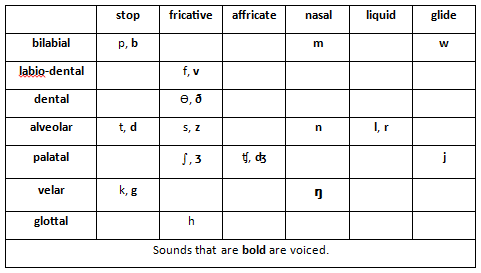
place是左邊這排,manner是右邊這排
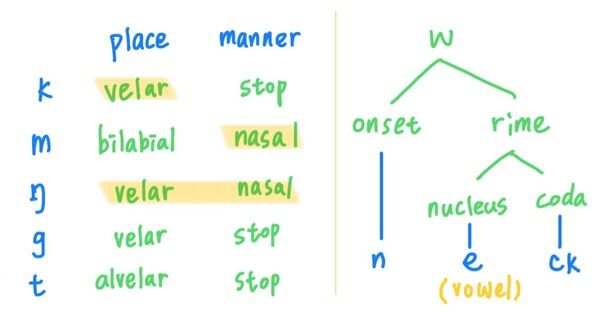
[k] is velar, stop
[m] is bilabial, nasal
(A)sing has [g] and [n], so it's the same place as [k] and the same manner of [m].
48
2

bees123
#3353839
語音組合法(Phonotactics)
語音組合法是音系學的其中一個分支,研究在某一種語言中的語音組合法則。
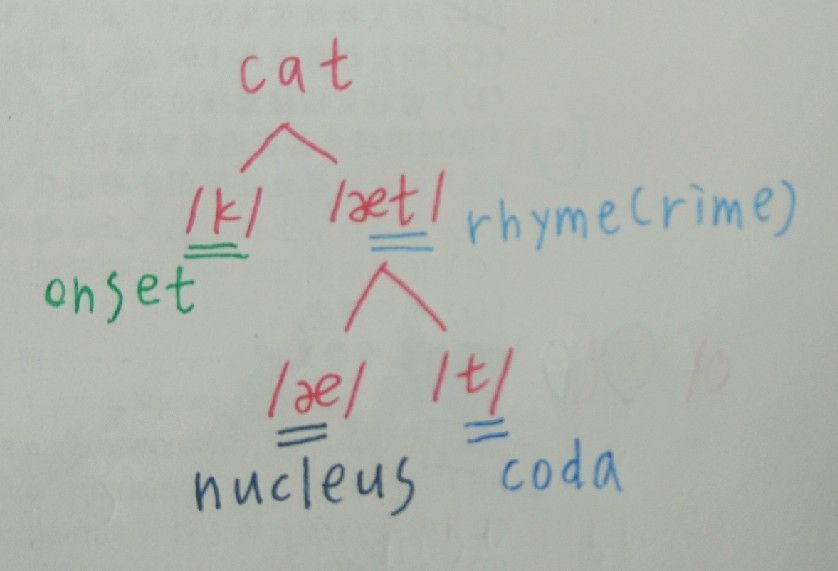
一般來說,對於每一個syllable,我們都可以分為以下兩個部份:
(1)音節頭(onset)、聲母(initial):在元音之前的輔音
(2)韻母(rime=rhyme):在音節頭之後的元音及隨後的子音
【例】cat 這個字念作 /kæt/,其中/k/ 就是onset,/æ t/ 就是rime
☆小撇步:看到一個單字,先找到母音,在母音前面劃一刀,就可以切割 onset 和 rime
韻母裡又分為兩種:
(1)音節核(nucleus):韻母裡的元音
(2)音節尾(coda):隨後的子音
【例】已知 cat 這個字的韻母為/æt/
其中,/æ/ 是nucleus;/t/ 是coda
onset 和 coda 都可以不存在,但 nucleus 卻一定要存在!!!
記法:因為nucleus「通常」都是母音,所以一個單字如果缺了母音就不行喔!
22
0
bees123
#3353893
(A) sing 念作 / siŋ /
/s/ 是 onset;/i/是nucleus;/ŋ/ 是coda
所以題目問 "which coda..."→要看 /ŋ/
/ŋ/ 的 place of articulation 是 velar → 和 /k/ 一樣
/ŋ/ 的 manner of articulation 是 nasal → 和 /m/ 一樣
符合題目的要求,故選(A)
20
0

110年拚了
#4706370
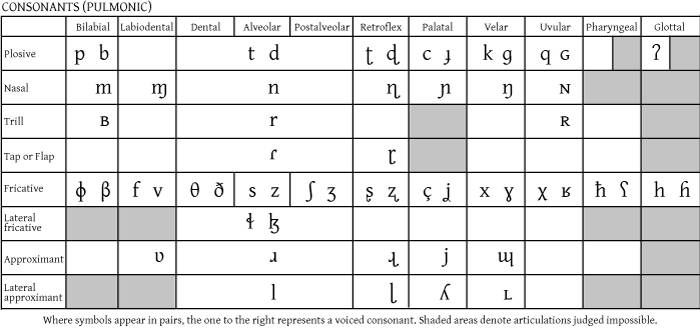
新版的表:請注意place是右邊這排,manner是左邊這排
左邊的有改名了喔~例如trill, tap, approximant
2
0

東東
#6421851
0
0