阿摩線上測驗
登入
首頁
>
學士後西醫-有機化學
>
103年 - 103 學士後西醫:有機化學#27037
> 試題詳解
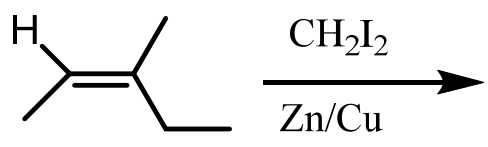
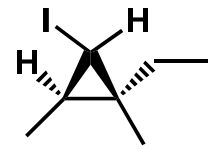
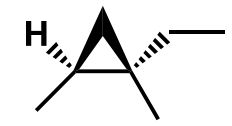
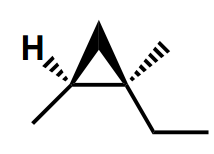
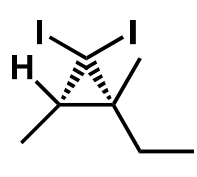
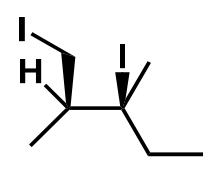
31. Choose the major product of the following reaction.
(A)
(B)
(C)
(D)
(E)
答案:
登入後查看
統計:
A(1), B(3), C(23), D(0), E(0) #937840
私人筆記 (共 2 筆)
白白
2024/10/18
私人筆記#6445214
未解鎖
(共 0 字,隱藏中)
前往觀看
1
0
范暐茹
2025/10/18
私人筆記#7501445
未解鎖
(共 0 字,隱藏中)
前往觀看
0
0
相關試題
1. Which of the following compounds is the most hydrophilic one? (A) (B) (C) (D) (E)
#937810
2. Which is the major product of the following reaction? (A) (B) (C) (D) (E)
#937811
3. What is the major product in the following reaction sequence? (A) (B) (C) (D) (E)
#937812
4. Which of the following carboxylic acids would undergo decarboxylation readily when heated? (A) I (B) II (C) III (D) IV (E) II and III
#937813
5. Two products can be obtained from the reaction below. One of the product is 2-Butanone. What is the most likely structure for the second product from the reaction? (A) (B) (C) (D) (E)
#937814
6. The aldol cyclization, followed by dehydration of 5-oxo-hexanal will give which product below. (A) (B) (C) (D) (E)
#937815
7. Predict the major structure of the expected product for the following reaction. (A) I (B) II (C) III (D) IV (E) V
#937816
8. What is the major product of the following reaction? (A) I (B) II (C) III (D) IV (E) V
#937817
9. Which of the following reaction sequences would convert 2-butanol into 2-deuterobutane? (A) 1. H2SO4, heat 2. BD3 in THF, then H2O2, NaOH (B) 1. H2SO4, heat 2. D2, Pd/C (C) 1. PBr3 2. Mg/ether, then D2O (D) 1. PBr3 2. NaOD, then D2O (E) 1. PBr3 2. NaD in hexane
#937818
10. Which of the following factors has NO effect on the rate of SN1 reactions? (A) the nature of the alkyl halide (B) the nature of the leaving group (C) the concentration of the alkyl halide (D) the concentration of the nucleophile (E) the value of the rate constant
#937819
相關試卷
105年 - 105 學士後西醫:有機化學#78642
2016 年 · #78642
104年 - 104 學士後西醫:有機化學#27032
2015 年 · #27032
103年 - 103 學士後西醫:有機化學#27037
2014 年 · #27037
102年 - 102 學士後西醫:有機化學#27324
2013 年 · #27324
101年 - 101 學士後西醫:有機化學#27197
2012 年 · #27197
100年 - 100 學士後西醫:有機化學#35480
2011 年 · #35480
98年 - 098 學士後西醫:有機化學#37156
2009 年 · #37156
96年 - 96學士後西醫-有機化學 #37201
2007 年 · #37201
 阿摩線上測驗
登入
阿摩線上測驗
登入
阿摩線上測驗
登入
阿摩線上測驗
登入