阿摩線上測驗
登入
首頁
>
學士後西醫物理及化學
>
114年 - 114 國立中山大學_學士後醫學系招生考試試題:物理與化學#126239
> 試題詳解
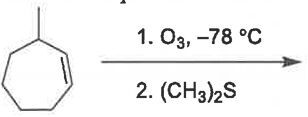
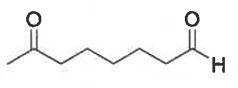
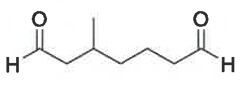
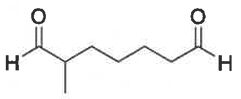
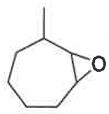
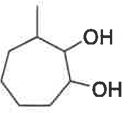
62. What is the product of the following reaction?
(A)
(B)
(C)
(D)
(E)
答案:
登入後查看
統計:
A(1), B(0), C(2), D(1), E(1) #3421257
詳解 (共 1 筆)
MoAI - 您的AI助手
B1 · 2025/09/21
#6764790
由於您提供的題目中包含的圖片無法顯示,我...
(共 802 字,隱藏中)
前往觀看
0
1
相關試題
1. Atmospheric pressure decreases with altitude, but not in a linear manner. It decreases according to the following formula: P = , where the constant k is given by , P0 is the atmospheric pressure at sea level, and y is the height above sea level. At what height above sea level will the atmospheric pressure be reduced to half? [ln2 = 0.69314] (A) 5545 m (B) 3447 m (C) 5034 m (D) 4790 m (E) 2996 m
#3421196
2. There are two tuning forks with frequencies 255 Hz and 251 Hz. When both tuning forks start vibrating, what frequency will be heard by the ear? How many times per second can a loud sound be heard? (A) 251 Hz, 2 times each second (B) 255 Hz, 4 times each second (C) 254 Hz, 3 times each second (D) 253 Hz, 4 times each second (E) 252 Hz, 2 times each second
#3421197
3. The method to correct hyperopia is to wear a convex lens with an appropriate focal length. Suppose a hyperopic person, at the maximum accommodation of the eye's lens (with the minimum curvature radius), can clearly see objects at a distance of 1.5 meters. What should be the focal length of the convex lens required for them to clearly see an object at a distance of 15 cm?(A) 14.0 cm(B) 13.5 cm(C) 22.0 cm(D) 15.0 cm(E) 16.6 cm
#3421198
4. In an adiabatic compression of an ideal gas, which of the following statements is NOT true? (A) The gas does work on its surroundings. (B) The internal energy of the gas increases. (C) The temperature of the gas increases. (D) The gas absorbs heat from its surroundings. (E) The process results in a change in the state of the gas.
#3421199
5. The method to correct myopia is to wear a concave lens with an appropriate focal length. Suppose a person has myopia, and the nearest object he/she can clearly see without the accommodation of the lens is at a distance of 45 cm. What should be the focal length of the concave lens required for the person to clearly see objects at infinity? (A) 22.5 cm (B) 45.0 cm (C) 90.0 cm (D) 15.0 cm (E) 60.0 cm
#3421200
6. The arterial blood pressure in the head and feet of a person standing differs from that when lying down. Suppose the difference (in magnitude) in arterial blood pressure in the head between the lying and standing positions is AP₁, and the difference in arterial blood pressure in the feet between these two positions is AP2. Given that the density of blood is p and the local gravitational field strength is g, find the height of the person. (A) (B) (C)(D)(E)
#3421201
7. If the ammeter detects a current of A, how many electrons pass through the cross-section of the wire per second? (A) (B) (C)(D) (E)
#3421202
8. An electrocardiogram (ECG) can detect heart activity because the heart can form an electric dipole under external stimulation. Suppose the capacitance per unit area of a cardiac myocyte (心肌細胞) is C, the total surface area of the cardiac myocyte is A, and the transmembrane voltage is V. Suppose that the thickness of the cardiac myocyte is d. What is the electric dipole moment of a single cardiac myocyte? (A) CVAd (B) CVd (C) CVd/A (D) CV/A (E) CV
#3421203
9. Nyboer theoretically discovered in 1940 that changes in impedance can be used to determine changes in the cross-sectional area of blood vessels. Impedance is the resistance of a conductor in an alternating current circuit (frequency ω). There are various substances with different resistivities within the human body, so the human body exhibits a significant capacitance. The circuit composed of resistance R and capacitance C can be divided into series and parallel configurations. In the case of resistance and capacitance in series, what is the impedance Z? (A) (B)(C)(D)(E)
#3421204
10. When the observer and the sound source are stationary relative to each other, the observed frequency is f. Suppose the observer and the source are moving toward each other. If the observer's speed is 0.25v and the source's speed is also 0.25v, where v is the sound speed. What will be the observed frequency? (A) 5f/4 (B) 3f/4 (C) 4f/3 (D) 3f/5 (E) 5f/3
#3421205
相關試卷
115年 - 115 國立中山大學_學士後醫學系招生考試試題:物理與化學#138404
2026 年 · #138404
115年 - 115 學士後醫學系招生考試試題:物理及化學#138377
2026 年 · #138377
115年 - 115 國立清華大學_學士後醫學系招生考試試題_學士後醫學系:化學與物理#138209
2026 年 · #138209
114年 - 114 學士後醫學系招生考試試題:物理及化學#126679
2025 年 · #126679
114年 - 114 國立清華大學_學士後醫學系_自然科學組﹕物理化學#126266
2025 年 · #126266
114年 - 114 國立中山大學_學士後醫學系招生考試試題:物理與化學#126239
2025 年 · #126239
113年 - 113 國立清華大學_學士後醫學系單招試題_學士後醫學系自然科學組:化學與物理#119930
2024 年 · #119930
113年 - 113 學士後醫學系招生考試:物理及化學#119747
2024 年 · #119747
113年 - 113 國立中山大學_學士後醫學系招生考試:物理及化學#119273
2024 年 · #119273
112年 - 112 學士後醫學系招生考試:物理及化學#114227
2023 年 · #114227
 阿摩線上測驗
登入
阿摩線上測驗
登入
阿摩線上測驗
登入
阿摩線上測驗
登入