阿摩線上測驗
68.承上題,下列何者不是長期使用L-dopa製劑所致之motor complications?
(A) dyskinesias
(B) on-off effect
(C) tardive dyskinesia
(D) wearing-off effect
統計: A(623), B(370), C(2277), D(800), E(0) #882565
詳解 (共 5 筆)


回3F (即使已經過了3年)
Wearing off and motor fluctuations
If you have been taking a Parkinson’s medication that contains levodopa for some time, you may develop some movement difficulties throughout the day, the so-called late levodopa complications.
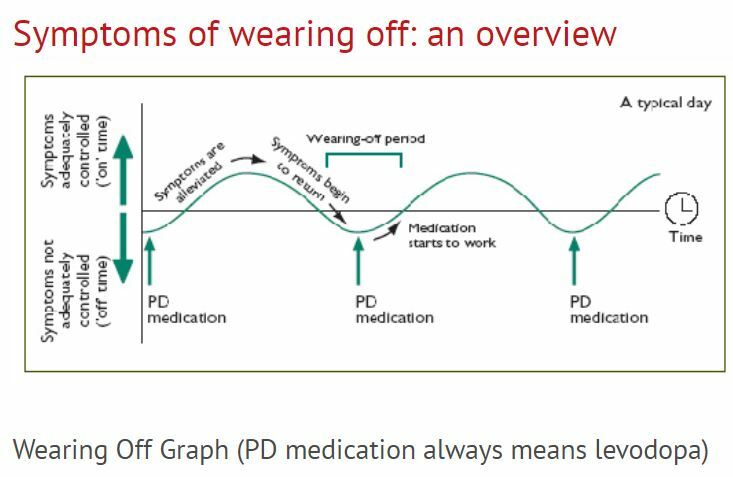
我反而疑惑的是on-off effect、wearing-off effect 差在哪,這張圖終於解惑了。
https://www.epda.eu.com/about-parkinsons/symptoms/motor-symptoms/wearing-off-and-motor-fluctuations/
Dyskinesia
Dyskinesia is most commonly caused by extended use of the medication levodopa. Levodopa is the preferred medication used in the treatment of Parkinson’s due to its effectiveness.
Levodopa increases the level of dopamine in the brain. People with Parkinson’s lack dopamine-producing brain cells. Levodopa replaces dopamine for those with Parkinson’s as well as other conditions that involve low levels of dopamine. However, your dopamine levels will rise when you take levodopa and fall as the levodopa wears off. It’s believed that these variations in dopamine levels are the cause of the involuntary movements of dyskinesia.
The symptoms vary from person to person. They can be very mild with a slight movement of the head, arm, or leg. They can also be severe and include multiple parts of the body moving involuntarily. Some of the symptoms of dyskinesia may look like:
- fidgeting
- wriggling
- swaying of the body
- bobbing of the head
- twitching
- restlessness
(Dyskinesia 影響頭部,手臂或腿部)
Tardive dyskinesia
Tardive dyskinesia affects people with severe mental illnesses that require extended treatment with antipsychotic medications. Tardive dyskinesia is similar to dyskinesia because it also causes involuntary movements. However, the movements of tardive dyskinesia usually affect the tongue, lips, mouth, or eyelids. The symptoms of tardive dyskinesia may include the following involuntary movements:
- smacking your lips repetitively
- making a grimace repetitively
- rapid blinking
- puckering your lips
- sticking out your tongue
(TD影響舌頭,嘴唇,嘴巴或眼瞼)