所屬科目:學士後西醫-化學
1. What is the bond order of the carbon-carbon bonds in benzene?(A)2(B) 1.5(C) 3(D)0.5(E) 1
2. 1-Methylcyclopentanol is classified as ________. (A) an enol (B) a secondary alcohol (C) a tertiary alcohol (D) a phenol (E) a primary alcohol
3. The Hofmann elimination proceeds via a(n) ________ pathway. (A)E1 (B) E2 (C) SN2 (D)SN1 (E) none of the above
4. Which of the following yields a primary alcohol upon reduction? (A) a ketone (B) an alkene (C) an amine (D) an aldehyde (E) an ether
5. The following two reactions are important in the blast furnace production of iron metal from iron ore (Fe2O3):
Using these balanced reactions, how many moles of O2 are required for the production of 2.51 kg of Fe? (Molecular weight of Fe = 55.85 g/mol) (A)33.7 moles (B) 15.0 moles (C) 135 moles (D)44.9 moles (E) 1.88 moles
6. Esters and amides are most easily made by nucleophilic acyl substitution reactions on ________. (A) acid chlorides (B) carboxylic acids (C) acid anhydrides (D) carboxylates (E) alcohols
7. Which of the following is also an acceptable name for 3-nitrophenol? (A)3-cresol (B) hydroquinone (C) m-nitrophenol (D)p-nitrophenol (E) o-nitrophenol
8. Consider the fermentation reaction of glucose: A 1.00-mole sample of C6H12O6 was placed in a vat with 100 g of yeast. If 48.6 grams of C2H5OH was obtained, what was the percent yield of C2H5OH? (A)52.7 % (B) 26.4 % (C) 100 % (D)48.6 % (E) None of these
9. Which of the following solvents could be described as polar and protic? (A)18-crown-6 (B) ethanol (C) acetone (D)dimethylformamide (E) acetonitrile
10. In which of the following compounds does N have its maximum oxidation state? (A)NH3 (B) N2O (C) N2 (D)NaNO3 (E) HN3
11. The RNA backbone is linked through a phosphate group. What type of bonding occurs between two consecutive nucleotides in RNA? (A)Ester (B) Amide (C) Hydrogen (D)Ionic (E) Hydrophobic
12. How many peaks appear in the proton spin decoupled 13C NMR spectrum of the compound below?(A)2 (B) 3 (C) 4 (D)5 (E) 6
13. UV spectroscopy measures the energy required to promote an electron from the ________ molecular orbital to the ________ molecular orbital. (A)lowest occupied, highest unoccupied (B) lowest occupied, lowest unoccupied (C) highest occupied, highest unoccupied (D)highest occupied, lowest unoccupied (E) None of the above
14. When pent-1-ene is treated with mercury(II) acetate in methanol and the resulting product is reacted with NaBH4, what is the primary organic compound which results? (A)3-ethoxypentane (B) 1-methoxypentane (C) 2-ethoxypentane (D)2-methoxypentane (E) 1-ethoxypentane
15. Provide an acceptable name for the compound below.(A)1,3-diphenyl-3-oxypropane (B) phenoxyphenylmethane (C) diphenyl ether (D)dibenzyl ether (E) dibenzyl acetal
16. How would you perform the following transformation? (A)LiAlH4 (B) 1. SOCl2 / 2. LiAlH(O-t-Bu)3 (C) NaBH4 (D)1. DIBAL-H / 2. H2O (E) 1. LiAlH4 / 2. concentrated KMO4
17. What is the best way to perform the transformation shown below?(A) 1. NaCN / 2. H3O+ (B) 1. Mg / 2. CO / 3. H3O+ (C) concentrated KMnO4 (D) 1. NaN3 / 2. H3O+ (E) Both A and B would work
18. Which of the following molecules has a characteristic stretch at 3300 cm-1? (A)(CH3)2CHCO2CH3 (B) (CH3)2CHCH2N(CH3)2 (C) (CH3)3CH (D)(CH3)2CHCH=CH2 (E) (CH3)2CHC≡CH
19. What type of carbon environment does not generate a signal in the DEPT-90 spectrum and gives a positive peak in the DEPT-135 spectrum? (A)methine (B) methylene (C) quaternary (D)methyl (E) carbonyl
20. An NMR spectrometer that operates at a frequency of 60 MHz for 13C NMR spectra, operates at what frequency for 1 H NMR spectra? (A)60 MHz (B) 15 MHz (C) 120 MHz (D)240 MHz (E) 30 MHz
21. If a mixture contains 75% of one compound and 25% of its enantiomer, what is the e.e. of the mixture? (A)100 (B) 75 (C) 3 (D)50 (E) 25
22. Consider the constitutional isomers 2-methylbut-1-ene, 2-methylbut-2-ene, and 3-methylbut-1-ene. When each of these alkenes is subjected to catalytic hydrogenation (H2, Pt), a single product results. Which of the following best describes the structural relationship among these products? (A)The products are diastereomers. (B) The products are identical. (C) The products are constitutional isomers. (D)The products are enantiomers. (E) The products are cis-trans isomers.
23. How many elements of unsaturation are implied by the molecular formula C8H11N? (A)0 (B) 1 (C) 2 (D)3 (E) 4
24. Which of the following terms best describes the stereochemical relationship of the two compounds shown below in Fischer notation? (A)Diastereomers (B) cis/trans – isomers (C) enantiomers (D) constitutional isomers (E) meso - same structure
25. Which line-angle formula corresponds to the chair conformation shown below? (A)(B) (C) (D)
26. Predict the major organic product from the following reaction.
(A)2° amide (B) ester (C) carboxylic acid (D)nitrile (E) aldehyde
27. Show how you would perform the following synthesis. (A)1. mCPBA / 2. Potassium dichromate (B) OsO4 (C) KMnO4, cold. Basic (D)1. O3 / 2. (CH3)2S (E) H2O2
28. Identify the correct name for the following structure.(A)4-hydroxy-7,N-dimethylcyclohept-6-enamine (B) 5-hydroxy-2,N-dimethylcyclohept-2-enamine (C) 4-methyl-5-(methylamino)cyclohept-3-enol (D)5-methyl-4-(methylamino)cyclohept-5-enol (E) 4-methyl-5-(methylamino)cyclohept-3-en-1-one
29. Which of the following structures is aromatic? (A) (B) (C) (D) (E)
30. Acid chlorides can be prepared from carboxylic acids by treatment with ________. (A)(COCl)2 (B) SOCl2 (C) KCl (D)Both A and B (E) Both B and C
31. By what mechanism does cyclohexanol react when treated in sulfuric acid and what compound results? (A)E2; methoxycyclohexane (B) E1; cyclohexene (C) SN1; methoxycyclohexane (D)E2; cyclohexene (E) E1; methoxycyclohexane
32. Which of the following is transition metal? (A)Sodium (B) Potassium (C) Copper (D)Silicon
33. What is the major organic product that results when 1-heptyne is treated with 2 equivalents of HBr? (A)2,2-dibromoheptane (B) 1,2-dibromoheptane (C) 2,3-dibromo-1-heptene (D)2,3-dibromo-2-heptene (E) 1,1-dibromoheptane
34. Provide the reagents necessary to complete the following transformation. (A) 1. CH3CO3H / 2. H+ , H2O (B) H2O, H2SO4 (C) CH3CO3H (D) OsO4, H2O2 (E) 1. BH3∙THF / 2. H2O2, HO-
35. Which of the following additions to alkenes occur(s) specifically in an syn fashion? (A) addition of H2 (B) hydroboration (C) dihydroxylation using OsO4, H2O2 (D) addition of HCl (E) A, B and C
36. What is the correct name for the structure of coordination number 6? (A)Tetrahedral (B) Octahedral (C) Square planar (D)Linea
37. Which of the following has the highest melting temperature? (A)H2O (B) CO2 (C) LiF (D)C60
38. What is the oxidation number of manganese in K4[Mn(CN)6]? (A)2+ (B) 3+ (C) 4+ (D)6+
39. Which of the following metal ions has a d8 electron configuration? (A) Ni2+ (B) Zn2+ (C) Cr3+ (D) Cu+
40. Which of the following is polar molecule? (A)H2 (B) He (C)CO2 (D)H2O
41. Using the following data reactions:calculate the energy of an H-Br bond. (A) 728 kJ (B) 261 kJ (C) 364 kJ (D) 522 kJ (E) 182 kJ
42. What type of structure does the XeOF2 molecule have? (A) Trigonal pyramid (B) Tetrahedral (C) T-shaped (D) Trigonal planar (E) Bent
43. How many electrons are involved in π bonding in benzene, C6H6? (A) 3 (B) 12 (C) 18 (D) 6 (E) 10
44. An element with the electron configuration [Xe] 6s24f145d7 would belong to which class on the periodic table? (A) transition elements (B) halogens (C) rare earth elements (D) alkaline earth elements
45. For the reaction 4FeCl2(aq) + 3O2(g) → 2Fe2O3(s) + 4Cl2(g), what volume of a 0.620 M solution of FeCl2 is required to react completely with 7.26 ×10²¹ molecules of O2? (A) 6.45 × 10³ mL (B) 9.97 mL (C) 14.6 mL (D) 25.9 mL (E) 5.61 mL
46. The calibration points for the linear Reaumur scale are the usual melting point of ice and boiling point of water, which are assigned the values 0°R and 80°R, respectively. The boiling point of benzene is 80.1°F. What is this temperature in °R? (A)160.1°R (B) 49.8 °R (C) 26.7 °R (D)212.2 °R (E) 21.4 °R
47. Relative abundance is the unit along the y-axis in a mass spectrum. What are the units on the x-axis? (A)mass (m) (B) frequency (ν) (C) molecular weight (amu) (D)mass/charge (m/z) (E) boiling point (b.p.)
48. Consider the reaction 3A + B + C → D + E where the rate law is defined asAn experiment is carried out where [B]0 = [C]0 = 1.00 M and [A]0 = 1.00 × 10⁻⁴ M. After 3.00 minutes, [A] = 3.26 × 10⁻⁵ M and= 3.067 × 10⁴ . The value of k is : (A)6.23 × 10⁻³ L3 /mol3 ·s (B) 3.26 × 10⁻⁵ L3 /mol3 ·s (C) 1.15 × 10² L3 /mol3 ·s (D)1.00 × 10⁸ L3 /mol3 ·s (E) None of these
49. The relationship between 1 and 2 is: ________. (A) constitutional isomers (B)same compound (C) enantiomers (D)diastereomers (E) none of above
50. The relationship between 1 and 2 is: ________. (A) constitutional isomers (B)same compound (C) diastereomers (D) enantiomers (E) none of above
 阿摩線上測驗
登入
阿摩線上測驗
登入


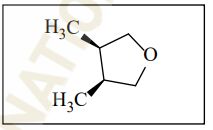 (A)2 (B) 3 (C) 4 (D)5 (E) 6
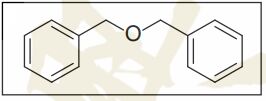 (A)1,3-diphenyl-3-oxypropane (B) phenoxyphenylmethane (C) diphenyl ether (D)dibenzyl ether (E) dibenzyl acetal
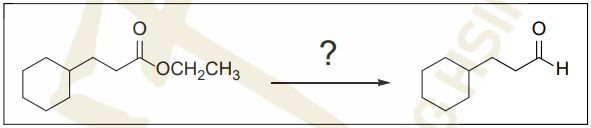 (A)LiAlH4 (B) 1. SOCl2 / 2. LiAlH(O-t-Bu)3 (C) NaBH4 (D)1. DIBAL-H / 2. H2O (E) 1. LiAlH4 / 2. concentrated KMO4
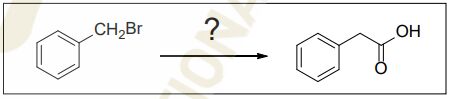 (A) 1. NaCN / 2. H3O+ (B) 1. Mg / 2. CO / 3. H3O+ (C) concentrated KMnO4 (D) 1. NaN3 / 2. H3O+ (E) Both A and B would work
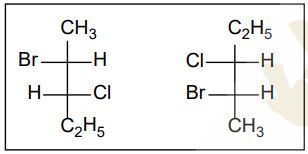 (A)Diastereomers (B) cis/trans – isomers (C) enantiomers (D) constitutional isomers (E) meso - same structure
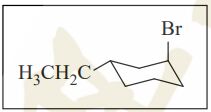 (A)
(A)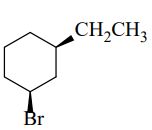 (B)
(B)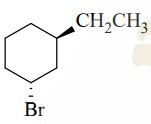 (C)
(C) 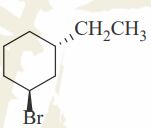 (D)
(D)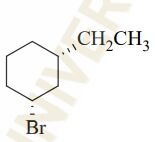
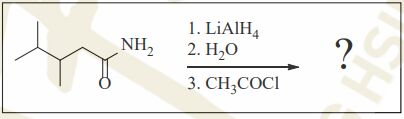 (A)2° amide (B) ester (C) carboxylic acid (D)nitrile (E) aldehyde
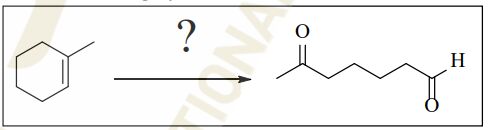 (A)1. mCPBA / 2. Potassium dichromate (B) OsO4 (C) KMnO4, cold. Basic (D)1. O3 / 2. (CH3)2S (E) H2O2
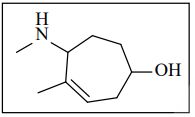 (A)4-hydroxy-7,N-dimethylcyclohept-6-enamine (B) 5-hydroxy-2,N-dimethylcyclohept-2-enamine (C) 4-methyl-5-(methylamino)cyclohept-3-enol (D)5-methyl-4-(methylamino)cyclohept-5-enol (E) 4-methyl-5-(methylamino)cyclohept-3-en-1-one
 (B)
(B) (C)
(C) (D)
(D) (E)
(E)
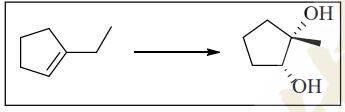 (A) 1. CH3CO3H / 2. H+ , H2O (B) H2O, H2SO4 (C) CH3CO3H (D) OsO4, H2O2 (E) 1. BH3∙THF / 2. H2O2, HO-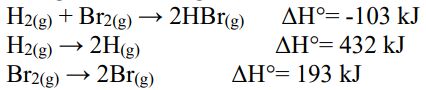
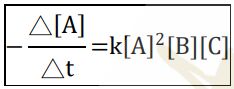
 = 3.067 × 10⁴ . The value of k is : (A)6.23 × 10⁻³ L3 /mol3 ·s (B) 3.26 × 10⁻⁵ L3 /mol3 ·s (C) 1.15 × 10² L3 /mol3 ·s (D)1.00 × 10⁸ L3 /mol3 ·s (E) None of these
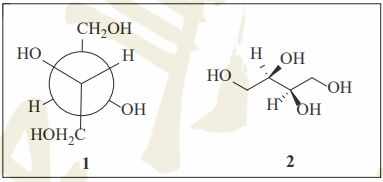 (A) constitutional isomers (B)same compound (C) enantiomers (D)diastereomers (E) none of above
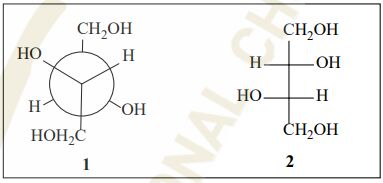 (A) constitutional isomers (B)same compound (C) diastereomers (D) enantiomers (E) none of above