阿摩線上測驗
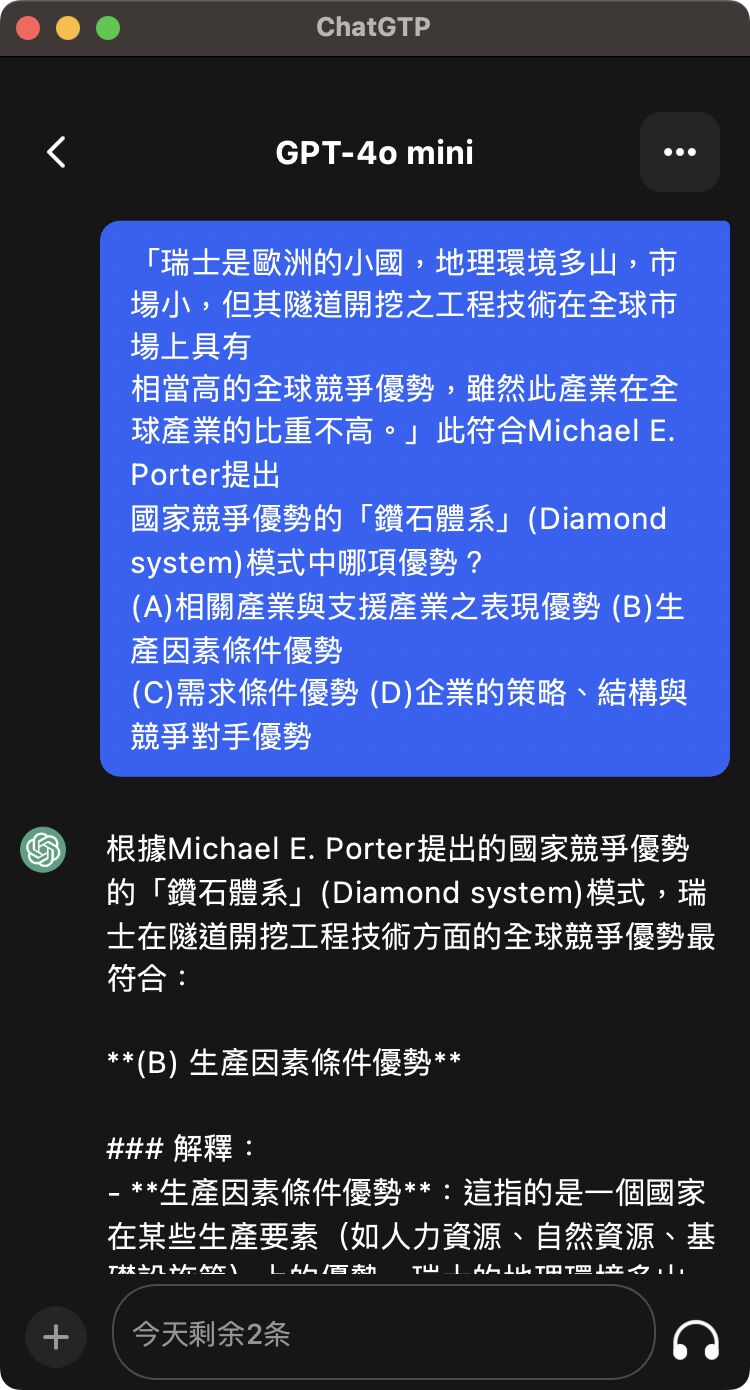
15. 「瑞士是歐洲的小國,地理環境多山,市場小,但其隧道開挖之工程技術在全球市場上具有
相當高的全球競爭優勢,雖然此產業在全球產業的比重不高。」此符合Michael E. Porter提出
國家競爭優勢的「鑽石體系」(Diamond system)模式中哪項優勢?
(A)相關產業與支援產業之表現優勢
(B)生產因素條件優勢
(C)需求條件優勢
(D)企業的策略、結構與競爭對手優勢
統計: A(809), B(1147), C(1635), D(165), E(0) #2800322
詳解 (共 10 筆)



王毅課本對需求條件的解釋為:國內市場需求、規模
這題的話,國內需求小,國外需求大,也算是需求條件優勢,那他這個定義是不是應該理解成:國內外市場需求、規模?


國內市場需求高或具有挑惕的顧客,會刺激企業創新
企業目標和策略會隨國際情形及產業變化而改變,國內市場競爭會促進創新,進而形成防範國外產品入侵的防護網


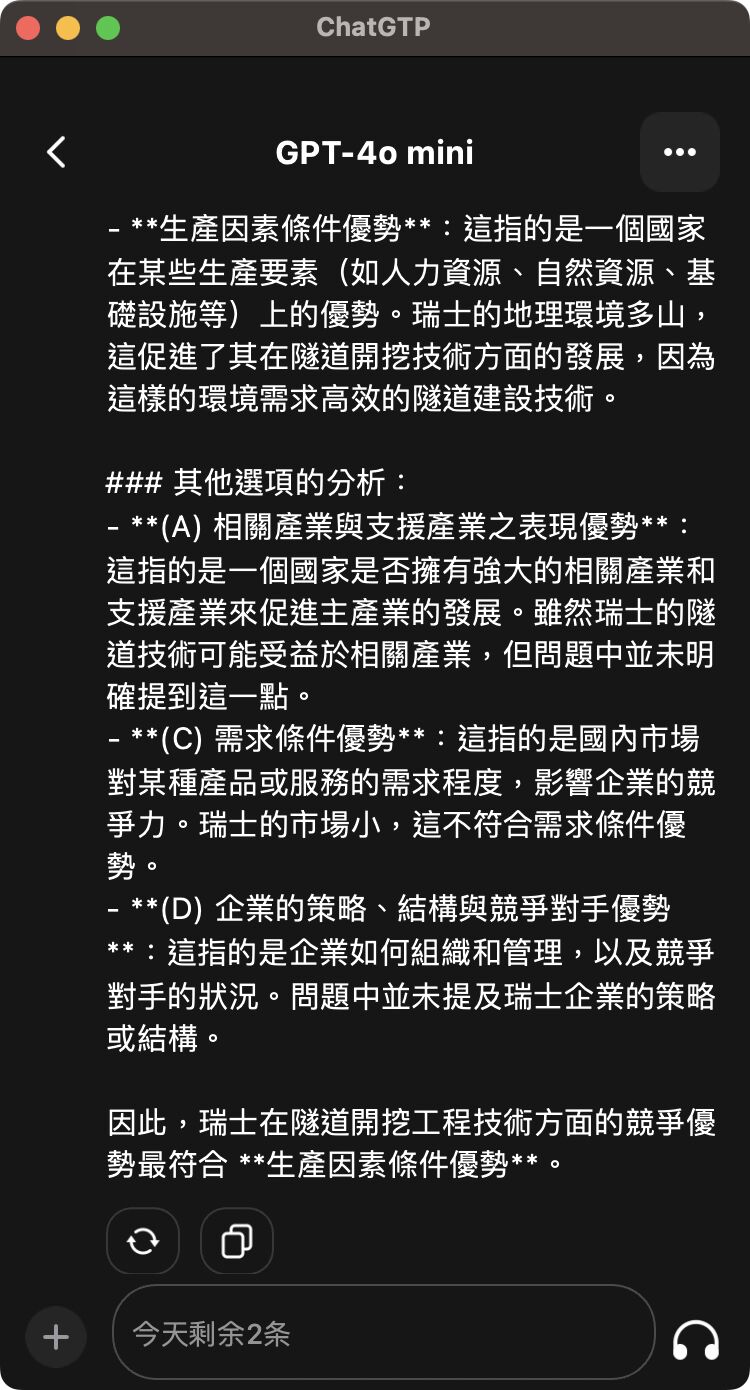
且題目題意:
1. 引導考生覺得瑞士市場小 → 內需低
2. 又說在全球產業的比重不高 → 外需低
內外需都低的情況,結果經濟部出來釋疑反而丟出2個bug:
1. 承上,邏輯不通
2. 直接魔改Porter的理論定義 → 外需?
簡直令人匪疑索思(←順便幫大家加強成語挑錯,2字)

-
A country creates its own important factors such as skilled resources and technological base.
-
The stock of factors at a given time is less important than the extent that they are upgraded and deployed.
-
Local disadvantages in factors of production force innovation. Adverse conditions such as labor shortages or scarce raw materials force firms to develop new methods, and this innovation often leads to a national comparative advantage.
II. Demand Conditions
- When the market for a particular product is larger locally than in foreign markets, the local firms devote more attention to that product than do foreign firms, leading to a competitive advantage when the local firms begin exporting the product.
- A more demanding local market leads to national advantage.
- A strong, trend-setting local market helps local firms anticipate global trends.
一、要素條件 一個國家會創造自身重要的生產要素,例如熟練的資源和技術基礎。 特定期間內生產要素的存量固然重要,但其升級與應用程度更為關鍵。 生產要素方面的本地劣勢會促使創新。勞動力短缺或原料匱乏等不利條件迫使企業開發新的生產方法,而這種創新往往會帶來國家比較優勢。 二、需求條件 當某種產品的本地市場規模大於國外市場時,本地企業會比外國企業更關注該產品,從而在本地企業開始出口該產品時獲得競爭優勢。 更具需求的本地市場會帶來國家優勢。 一個強勁且引領潮流的本地市場有助於本地企業預測全球趨勢。
瑞士是歐洲的小國,地理環境多山,市場小,..