 阿摩線上測驗
20 對瀰漫性血管內凝血(disseminated intravascular coagulation, DIC)病人進行藥物治療時,不應給予下列何種治療?
(A) Tranexamic acid
(B) Fresh frozen plasma(新鮮冷凍血漿)
(C) Cryoprecipitate
(D) Platelet(血小板)
統計: A(1130), B(106), C(151), D(486), E(0) #411211
詳解 (共 9 筆)

因為好奇,就小小整理了一下,筆記部分是簡易的記法。
整理自 「台灣血液基金會 血液成分精要」
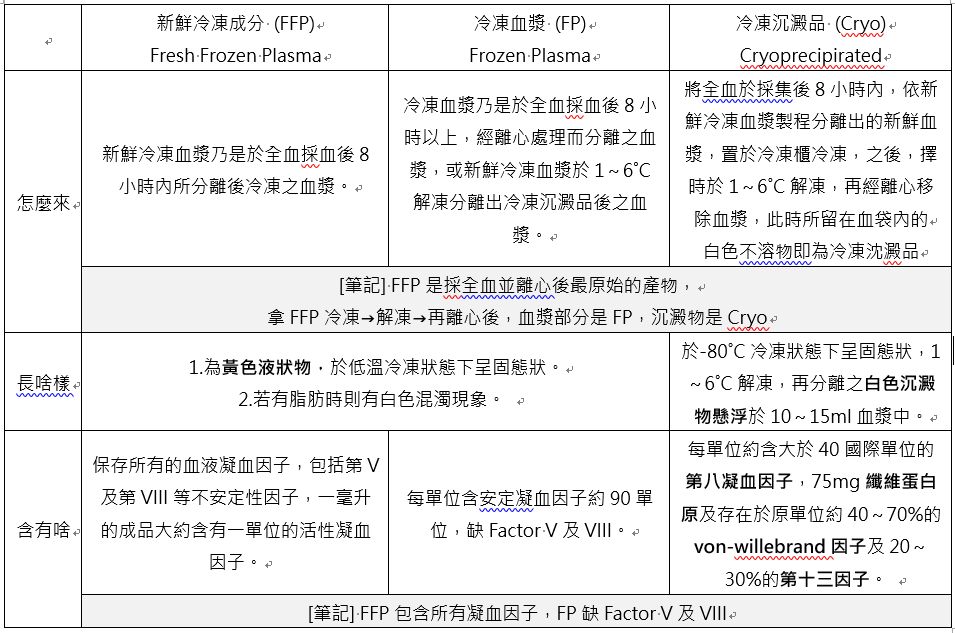
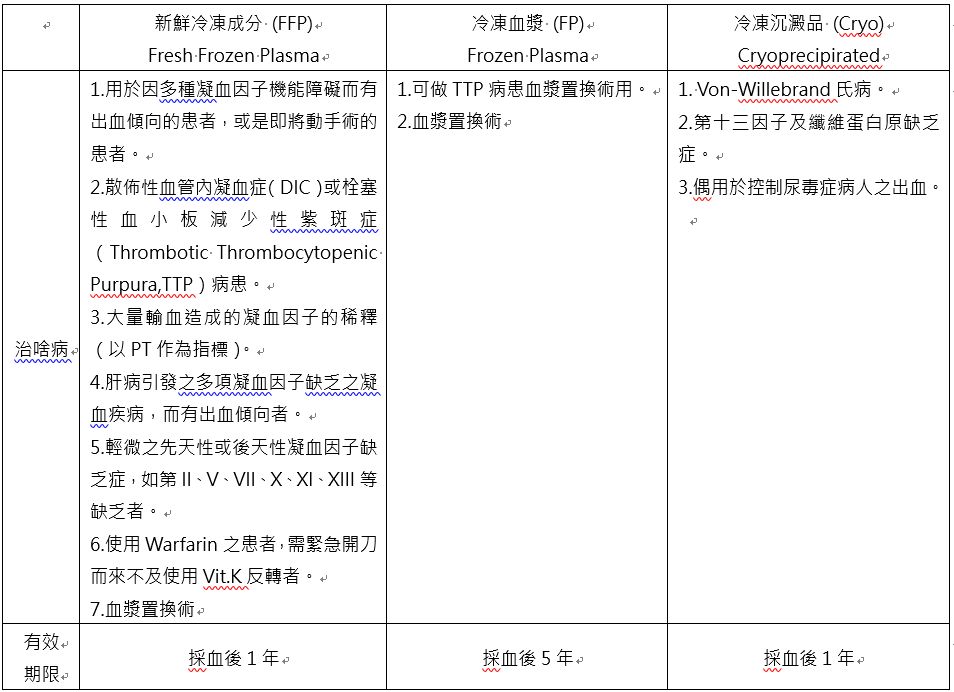

(A) Tranexamic acid 凝血劑
(C) Cryoprecipitate 血漿冷凍製劑
12 下列何者不是細菌性敗血症的併發症?
(A) Bleeding
(B) Hypertension
(C) Adult respiratory distress syndrome
(D) Disseminated intravascular coagulation

https://youtu.be/t4K_yRLlS1o

Cryoprecipitate, also called cryo for short, is a frozen blood product prepared from blood plasma.
use in:
Haemophilia – Used for emergency back up when factor concentrates are not available.
von Willebrand disease – Not currently recommended unless last reserve. ddAVP is first line, followed by factor concentrates.
Hypofibrinogenaemia (low fibrinogen levels), as can occur with massive transfusions
Afibrinogenemia
Bleeding from excessive anticoagulation – Fresh frozen plasma contains most of the coagulation factors and is an alternative choice when anticoagulation has to be reversed quickly.
Massive haemorrhage – RBCs and volume expanders are preferred therapies.
Disseminated intravascular coagulation
Uremic bleeding tendency