 阿摩線上測驗
題組內容
3. (20%) Consider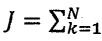 Y to be a compound Poisson distribution, where N follows a Poisson distribution with the expected number of event occurrences to be λ, and for each event occurrence, one receives a payoff Y, which follows an independent and identical normal distribution, ie., Y~ND(μ, σ2). Furthermore, assume N and Y are independent.
(b) (10%) Evaluate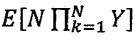 .
.
(Hint: For N, the probability of observing k events is given by P(k events occurring) = )
)