所屬科目:研究所、轉學考(插大)◆生理學
1. Which of the following is NOT a function of the liver? (A) to inactivate toxins and steroids (B) to maintain acid-base homeostasis (C) to preserve cholesterol homeostasis (D) to convert galactose to glucose.
2. Which of the following substances has a lower concentration in gallbladder bile than in hepatic duct bile? (A) bile acids (B) protons (C) fatty acids (D) sodium ions.
3. Which one is expected to have an increased level in blood if hepatectomy is performed? (A) glucose (B) albumin (C) conjugated bilirubin (D) estrogens.
4. Which of the following is the function of bradykinin? (A) decreased capillary filtration (B) vasodilation of the arterioles (C) hypoalgesia (D) interaction with the muscarinic receptors on the blood vessels.
5. Excessive fluid accumulation in the interstitial space is caused by (A) increased venous pressure (B) arteriolar constriction (C) increased plasma protein concentration (D) muscular activity.
6. According to the Frank-Starling mechanism, an increase in ventricular contractility is due to (A) increased cardiac output for a given end-diastolic volume (B) increased cardiac output for a given end-systolic volume (C) decreased cardiac output for a given end-diastolic volume (D) decreased cardiac output for a given end-systolic volume.
7. Which of the following are the major sites of the resistance to flow? (A) arteries (B) capillaries (C) veins (D) arterioles.
8. Hemorrhage elicits which of the following compensation change? (A) increased parasympathetic discharge to the heart (B) decreased heart rate (C) decreased firing rate of arterial baroreceptors (D) decreased contractility of vein.
9. Which of the following decreases during jogging? (A) total peripheral resistance (B) heart rate (C) stroke volume (D) blood flow to skeletal muscle.
10. A 25-year-old male changes his position to standing from lying down. The increase in heart rate upon standing is caused by (A) decreased total peripheral resistance (B) increased venoconstriction (C) increased afterload (D) decreased venous return.
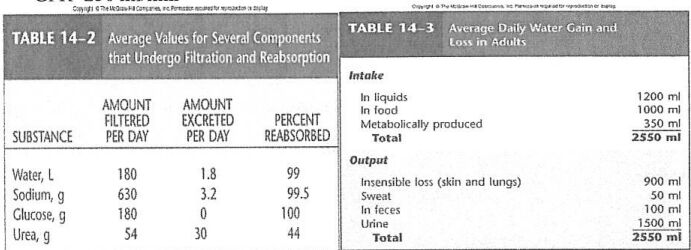
11. Calculate how much water (ml/day) does a person drink daily from the following data: GFR=250 ml/min (A) 1800 ml/day (B) 2550 ml/day (C) 2880 ml/day (D) 3600 ml/day
12. Which ion and hormone could be elevated after eating 5 kg banana in a short time period? (A) potassium and angiotensin I (B) potassium and aldosterone (C) sodium and aldosterone (D) sodium and cortisol
13. For the following materials, which one is absorbed only in proximal tubules? (A) glucose (B) potassium (C) sodium (D) inulin
14. In which organ and which enzyme can convert angiotensin I to angiotensin II? (A) lung, renin (B) liver, renin (C) lung, ACE (D) kidney, ACE
15. Which hormone is responsible for the women sexual desire? Which organ is responsible for this hormone secretion? (A) androgen, adrenal gland (B) progesterone, ovary (C) testosterone, follicle (D) cortisol, adrenal gland
16. Which two hormones could be induced for milk during baby suckling? (A) prolactin and estrogen (B) estrogen and oxytocin (C) oxytocin and prolactin (D) progesterone and oxytocin
17. For the following description, which one is correct? (A) acrosome is responsible for the energy production (B) tail is for the storage of sperm RNA (C) head is for the storage of sperm DNA (D) middle piece is for sperm movement
18. For the following description, which one is correct? (A) There are about 4,000 spermatogonia in fetal testes (B) There are about 400,000 follicles in ovary at the beginning of puberty (C) sperm maturation is about 100 days (D) primary oocytes appeared after puberty
19. An increase in excitatory postsynaptic potentials (EPSP) could be caused by increased (A) (B)(C) (D)
20. Which of following sensory inputs does not transmit to thalamus prior to reaching the cortex? (A) visual (B) olfactory (C) auditory (D) gustatory
21. If a nerve cell has ion permeabilities of = 0.05: 0.04: 1 at rest, then the resting membrane potential of this cell could be likely close to equilibrium potential of ion channel of (A) (B)(C)(D)
22. An action potential could likely occur (A) in myelinated axon (B) during a refractory period (C) at the hyper-polarizing membrane potential (D) during the summations of excitatory postsynaptic potentials
23. The spontaneous change in the neuron's membrane potential that leads to depolarization to threshold is named (A) pacemaker potential (B) receptor potential (C) action potential (D) synaptic potential
24. Which of following factors could decrease effectiveness of synaptic transmission (A) increase neurotransmitter release (B) decrease degradation of neurotransmitter (C) increase reuptake of neurotransmitter from synaptic cleft (D) increase sensitivity of postsynaptic receptors
25. The amino acid precursor used for synthesis of serotonin (5-HT) is (A) tryptophan (B) tyrosine (C) alanine (D) glutamine
26. The cranial nerve that transmits information from receptor in inner ear is (A) trochlear nerve (B) vestibulocochlear nerve (C) glossopharyngeal nerve (D) hypoglossal nerve
27. The respiratory bronchioles have (A) cartilage (B) smooth muscle (C) alveoli (D) vocal cords
28. Which of following substances could increase surfactant production? (A)angiotensin II (B)cortisol (C)dipalmitoylphosphatidylcholine (D)leukotrienes
29. In a normal individual, the highest transpulmonary pressure could be observed at the (A) beginning of inspiration (B) middle of inspiration (C) end of inspiration (D) middle of expiration
30. The amine hormones are derivatives of the amino acid tyrosine. Which of the following is not an amine hormone? (A) thyroid hormones (B) epinephrine (C) dopamine (D) angiotensin
31. Which of the following is inconsistent with the diagnosis of Cushing's syndrome? (A)low blood pressure (B) elevated serum levels of glucocorticoids (C)high blood glucose level (D)Moon face (puffiness)
32. Which of the following statements concerning a patient with iodine deficiency (not taking enough iodine from diet) is incorrect ? (A)decrease in production and secretion of thyroid hormones (T3, T4) (B) goiter formation (C) decrease of plasma TSH level (D)cold intolerance
33. Which of the following hormones bind to its receptor on the plasma membrane? (A)cortisol (B) thyroid hormone (C) epinephrine (D)insulin
34. The BMI of a female weighing 64 kg with a height of 160 cm would be (A)2.5 (B)40 (C)25 (D)400
35. Which of the following is NOT the physiological function of insulin? (A)increase glucose uptake by the muscle cells (B) increase glucose production by the liver (C)increase triglyceride production by the fat cells (D)increase protein synthesis by the muscle cells
36. Type 2 diabetes mellitus (T2DM) (A)is the most common form of diabetes (B) usually occurs in children (C)is caused by destruction of the pancreatic alpha cells (D)is caused by destruction of the pancreatic beta cells
37. Which of the following normally utilize only glucose for energy during the post-absorptive state (at hungry)? (A)liver cells (B) fat cells (C) white blood cells (D)nervous cells
38. When the neuron expels potassium ions, (A) the inside of the cell loses positive ions and produces a positive shift in membrane potential (B) the inside of the cell loses negative ions and produces a negative shift in membrane potential (C) the inside of the cell loses positive ions and produces a negative shift in membrane potential (D) the inside of the cell loses negative ions and produces a positive shift in membrane potential
39. Osmosis: (A) involves the diffusion of water (B) can cause a cell to shrink when placed in a hypotonic solution (C) occurs through a non-permeable membrane (D) depends upon the chemical composition of solute particles rather than their total concentration
40. Which is incorrect? Membrane ion channels (A) permit movement of ions following electrochemical gradients (B) remain always open as long as the activating signal is present (C) for sodium may be blocked by tetrodotoxin (D) may be opened by a given change in transmembrane potential
41. Alveoli are microscopic air sacs in the lungs of mammals. Which statement best describes how the structure of the alveoli allows the lungs to function properly? (A) They increase the amount of energy transferred from the lungs to the blood (B) They increase the flexibility of the lungs as they expand during inhalation (C) They increase the volume of the lungs, allowing more oxygen to be inhaled (D) They increase the surface area of the lungs, allowing efficient gas exchange
42. The functional unit of contraction in a skeletal muscle fiber is the: (A) troponin (B) reticulum (C) tropomyosin (D) sarcomere
43. Tendons: (A) connect bones to bones and are muscle tissues (B) connect muscles to bones and are muscle tissues (C) connect bones to bones and are connective tissues (D) connect muscles to bones and are connective tissues
44. Smooth muscles differ from skeletal muscles in that they (A) may have gap junctions (B) are under voluntary control (C) lack myosin (D) lack actin
45. Which one of the following statements is correct regarding skeletal muscle contraction? (A) All motor units in a muscle usually contract simultaneously (B) Muscle contraction continues for long periods (e.g. ~1 sec) after nervous stimulation ceases (C) The initiation of contraction is dependent on troponin-action interaction (D) All muscle fibers in a motor unit usually contract simultaneously
二、翻譯題
1. Excessive consumption of high-fat diets has become increasingly common in many countries around the world, increasing the risks of serious health outcomes such as cardiovascular diseases, metabolic syndrome and obesity. Caloric consumption beyond metabolic need is driven by the rewarding value of high-fat food, which is mediated by the mesolimbic dopamine pathway. Activation of this pathway by a high-fat diet involves orexin signalling.(10%)
 阿摩線上測驗
登入
阿摩線上測驗
登入
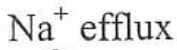 (B)
(B)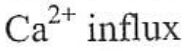 (C)
(C)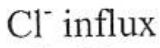 (D)
(D)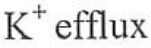
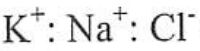 = 0.05: 0.04: 1 at rest, then the resting membrane potential of this cell could be likely close to equilibrium potential of ion channel of (A)
 (B)
(B) (C)
(C) (D)
(D)