阿摩線上測驗
登入
首頁
>
學士後西醫-有機化學
>
96年 - 96學士後西醫-有機化學 #37201
> 試題詳解
30. What splitting pattern is observed in the proton NMR spectrum for the indicated hydrogens?
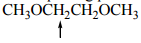
(A) Singlet
(B) Doublet
(C) Triplet
(D) Singlet of singlet
(E) Multiplet
答案:
登入後查看
統計:
A(8), B(2), C(13), D(0), E(0) #1074576
詳解 (共 1 筆)
依柔(128481歡迎輸入邀請碼)
B1 · 2020/05/26
#4001893
很簡單。。。。。。。。。。。。 請先標...
(共 76 字,隱藏中)
前往觀看
6
0
其他試題
26. Which of the following terms best describes the compound shown below? (A) a lecithin (B) a diterpene (C) a steroid (D) a glyceride (E) a prostaglandin
#1074572
27. What configurations are found in the product(s) of the reaction shown below? (A) 1R, 2R only (B) 1S, 2S only (C) 1R, 2S only (D) An equal mixture of 1R, 2R and 1S, 2S (E) An equal mixture of 1R, 2R and 1R, 2S
#1074573
28. Which of the following statements correctly describes the molecule shown below? (A) It is achiral (B) It is meso (C) Its asymmetric center possesses the R configuration (D) The mirror image of this molecular is its enantiomer (E) The molecule possesses enantiotopic hydrogens
#1074574
29. Which of the following m/z values is the base peak for benzyl alcohol? (A) 17 (B) 52 (C) 77 (D) 91 (E) 108
#1074575
31. The Hell-Volhard-Zelinsky reaction involves: (A) α-Bromination of carboxylic acids (B) α-Bromination of ketones (C) Formation of α, β -unsaturated carboxylic acids (D) Formation of β-ketoesters (E) Formation of amines
#1074577
32. Which of the following reagents would reduce carboxylic acids and esters into alcohols? (A) H2/Ranney Ni (B) 1) LiAlH4; 2) H3O+ (C) 1) NaBH4; 2) H3O+ (D) Na/NH3 (E) Zn(Hg)/H+
#1074578
33. Which of the following reducing agents is best used in the reaction shown below? (A) H2/Ranney Ni (B) 1) LiAlH4; 2) H3O+ (C) 1) NaBH4; 2) H3O+ (D) Na/NH3 (E) Zn(Hg)/H+
#1074579
34. What is the systemic name of the following compound? (A) 1-Azabicyclo[2,2,1]heptane (B) 2-Azabicyclo[2,2,1]heptane (C) 1-Azabicyclo[2,2,1]hexane (D) 2-Azabicyclo[2,2,1]hexane (E) 1-Azabicyclo[2,1,1]hexane
#1074580
35. What is the name of the following reaction? (A) Wittig reaction (B) Michael reaction (C) Dieckmann condensation (D) Cope reaction (E) Knoevenagel reaction
#1074581
36. Which of the following lists the correct order of reactivity of the substrates in electrophilic aromatic substitution reactions? (A) Thiophene > pyrrole > furan > benzene (B) Benzene > thiophene > furan > pyrrole (C) Furan > pyrrole > benzene > thiophene (D) Pyrrole > furan > thiophene > benzene (E) Benzene > furan > pyrrole > thiophene
#1074582