阿摩線上測驗
4 言語運動系統可以細分為不同系統,包含:最終共同路徑(final common pathway)、直接活化路徑
(direct activation pathway)、間接活化路徑(indirect activation pathway),以及控制迴路,在不同 的系統出現損傷會有不同的臨床表徵,下列配對關係何者正確?①直接活化路徑:張力增加 ②間 接活化路徑:張力減弱 ③控制迴路:不自主運動 ④直接活化路徑:反射變弱 ⑤最終共同路徑: 肌肉無力 ⑥控制迴路:肌纖維顫動(fibrillation) ⑦直接活化路徑:Babinski sign ⑧控制迴路: 交替運動障礙(dysdiodokinesia)
(A)①②③⑤
(B)③⑤⑦⑧
(C)①②⑤⑥
(D)③④⑤⑧
統計: A(106), B(204), C(45), D(234), E(0) #1846659
詳解 (共 5 筆)

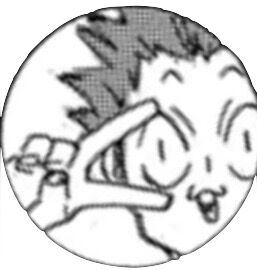
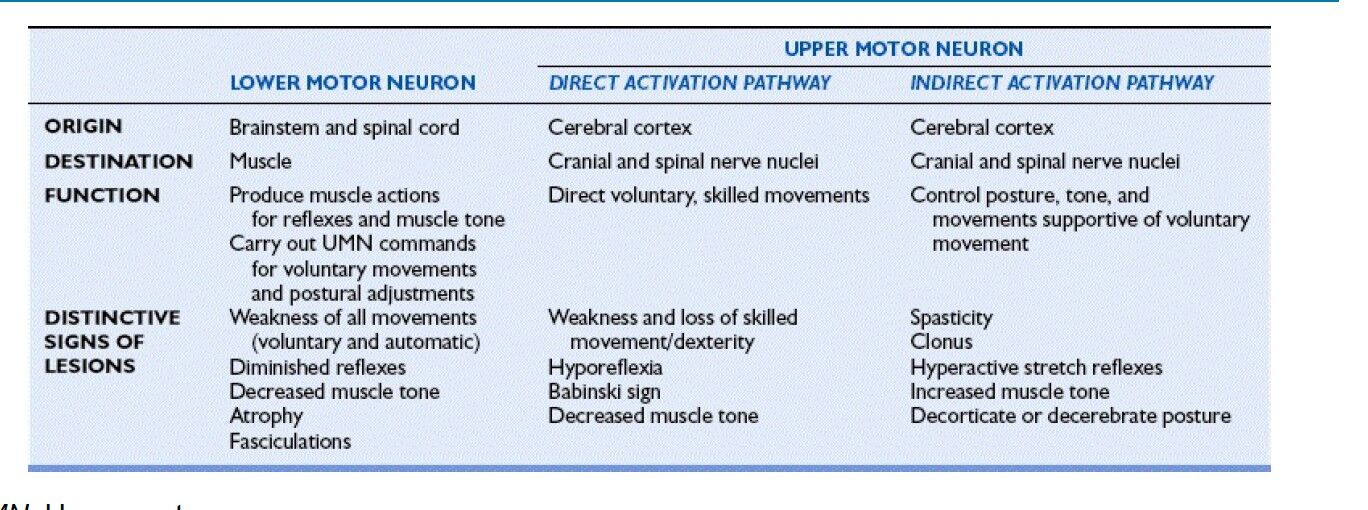
來源:Duffy,3e,p.90
根據Duffy(3e),選項34578均正確(B、D均正確),不知為何7不計入?
Direct activation pathway lesions are also associated with a positive Babinski sign, a pathologic reflex elicited by applying pressure from the sole of the foot on the side of the heel forward to the little toe and across to the great toe. The normal response is a planting of the toes. The Babinski response is an extension of the great toe and fanning of the other toes. When present in adults, a Babinski sign is associated with CNS damage, reflecting the release of a primitive reflex from CNS inhibition (a Babinski reflex is normal in infants
①直接活化路徑:張力增加 →張力減弱
②間接活化路徑:張力減弱 →張力增加
③控制迴路:不自主運動
④直接活化路徑:反射變弱
⑤最終共同路徑: 肌肉無力
⑥控制迴路:肌纖維顫動(fibrillation) → LMN
⑦直接活化路徑:Babinski sign
⑧控制迴路: 交替運動障礙(dysdiodokinesia)