阿摩線上測驗
登入
首頁
>
研究所、轉學考(插大)◆工程數學
>
110年 - 110 國立清華大學碩士班考試入學試題_聯合招生:工程數學#105258
> 申論題
題組內容
1. Solve the differential equations.
(a)
(5%)
相關申論題
(b) = 9x. Obtain y(x) that subjects to (5%)
#446421
2. Solve the system of differential equations for x(t) and y(t). (10%)
#446422
3. Find the series solution of the following differential equation about x = 0. (10%) You have to express the solution in the form of y(x) = C1y1(x)+ C2y2(x). To save time, you can only show the first five terms of y1(x) and y2(x).
#446423
4. Use the Laplace transform to solve the problem and obtain y(t). (5%)
#446424
(a) Find the determinant of M and obtain the inverse matrix .(3%+4%)
#446425
(b) Estimate the eigenvalues and eigenvectors of M.(4%+4%)
#446426
(a) Let f(x,y) = asin(xy) +x2 +4y2(1 -y). For what values of a will f have a local minimum at (0,0)? (5%)
#446427
(b) Let (a≥0). Find I'(a). It is evident that I(0) = 0. Solve I(a). (5%)
#446428
(a) Apply the divergence theorem to evaluate and S is the surface of the region bounded by the cylinder: r≤5, 0≤ θ ≤ 2π, 0≤ Z≤ 4. (5%)
#446429
(b) Let F =Fㆍdr where C is a counterclockwise circle x2 + y2 = 9 on the xy plane. (5%) [Formula] Divergence and curl in cylindrical coordinates:
#446430
相關試卷
110年 - 110 國立中央大學_碩士班招生考試_機械工程學系、機械工程學系(光機電工程)、能源工程研究所_(共同):工程數學#125285
110年 · #125285
110年 - 110 國立臺灣大學_碩士班招生考試_部分系所:工程數學(A)#125255
110年 · #125255
110年 - 110 台灣聯合大學系統_碩士班招生考試_電機科:工程數學(C)#125211
110年 · #125211
110年 - 110 台灣聯合大學_碩士班招生_電機類:工程數學C#124898
110年 · #124898
110年 - 台聯大_工程數學B#113346
110年 · #113346
110年 - 110 國立臺灣科技大學_碩士班招生試題_材料科學與工程系(乙組):工程數學#113288
110年 · #113288
110年 - 110 國立台北科技大學碩士班招生考試_自動化科技研究所:工程數學#111318
110年 · #111318
110年 - 110 國立臺灣大學_碩士班招生考試_部分系所:工程數學(D)(含線性代數、機率與統計)#111303
110年 · #111303
110年 - 110 台灣聯合大學系統碩士班招生考試_電機類:工程數學A#110408
110年 · #110408
110年 - 110 國立臺北科技大學_碩士班招生考試_機械工程系機電整合碩士班:工程數學#107430
110年 · #107430
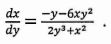 (5%)
(5%) 阿摩線上測驗
登入
(5%)
阿摩線上測驗
登入
(5%)