31. During a stressful event, the body produces both immediate and long-term physiological responses. Which of the following best describes how the hypothalamus and adrenal glands work together in this stress response?
(A) The hypothalamus releases corticotropin-releasing hormone (CRH) directly into the bloodstream to stimulate the adrenal medulla to secrete glucocorticoids.
(B) The adrenal medulla secretes glucocorticoids and mineralocorticoids, which produce rapid "fight-or-flight" responses.
(C) The hypothalamus signals the pituitary gland to release adrenocorticotropic hormone (ACTH), which stimulates the adrenal cortex to secrete glucocorticoids during long-term stress.
(D) Mineralocorticoids released from the adrenal medulla primarily increase heart rate during acute stress.
(E) During the short-term stress response, the anterior pituitary releases epinephrine directly into the bloodstream to bypass the slower neural pathways of the sympathetic nervous system.

答案:登入後查看
統計: A(0), B(0), C(4), D(0), E(0) #3853336

詳解 (共 1 筆)

#7362070

短期壓力 (fight-or-flight):交感神經 → 腎上腺髓質 → epinephrine/norepinephrine。  
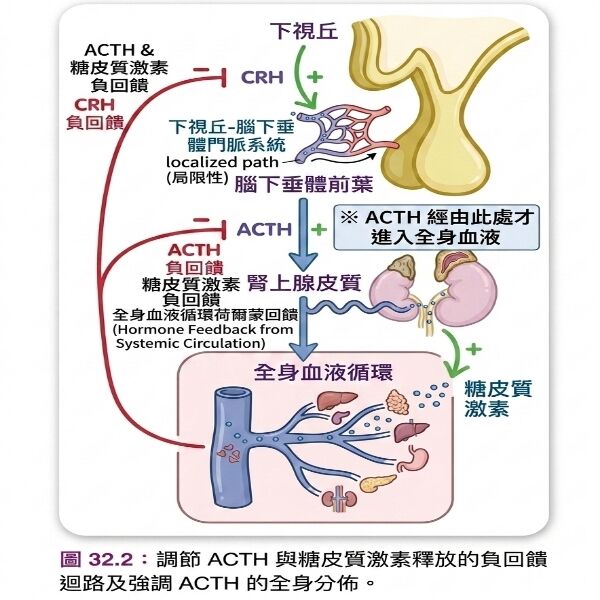
長期壓力 (HPA axis):下視丘 (CRH) → 腦下垂體 (ACTH) → 腎上腺皮質 → glucocorticoids。  
正確答案:C。  


選項解析
(A) 
The hypothalamus releases corticotropin-releasing hormone (CRH) directly into the bloodstream to stimulate the adrenal medulla to secrete glucocorticoids
<下視丘會將促腎上腺皮質激素釋放激素(CRH)直接釋放到血液中,以刺激腎上腺髓質分泌糖皮質素。>


身體的壓力反應路線應該是
1.下視丘先發訊號(CRH),但不會亂跑到全身
下視丘只把訊號送到 腦下垂體前葉
2.腦下垂體再發下一個訊號(ACTH),傳到腎上腺
3.腎上腺皮質才會分泌,壓力荷爾蒙(cortisol)


69f8c4a6d277a.jpg圖中可以看到CRH 只在下視丘-腦下垂體門脈系統中局部傳遞,不直接進入全身血液。  
ACTH 與 glucocorticoids 才是進入全身血液循環,並透過負回饋調控。 


2.作用對象錯

CRH 的作用目標是: 腦下垂體前葉 ,不是腎上腺


3.腎上腺部位 + 產物錯
題目說;the adrenal medulla to secrete glucocorticoids
腎上腺髓質(medulla) 分泌catecholamines(epinephrine, norepinephrine)

腎上腺皮質(cortex) 分泌:glucocorticoids(例如 cortisol)


完整路徑應該是:

下視丘
→ CRH(走「下視丘-腦下垂體門脈系統」)
→ 腦下垂體前葉
→ ACTH(這個才進入全身血液)
→ 腎上腺皮質
→ 分泌 glucocorticoids


(B) 


The adrenal medulla secretes glucocorticoids and mineralocorticoids, which produce rapid 'fight-or-flight' responses.


1.腎上腺髓質(adrenal medulla)應該分泌的是
epinephrine(腎上腺素)
norepinephrine(正腎上腺素)
2.epinephrine(腎上腺素)
norepinephrine(正腎上腺素)才負責:fight-or-flight(戰或逃反應)


☆記法: medulla = 中央、核心部分(middle髓)聯想成隨時 fight and flight


(C) hypothalamus → ACTH → adrenal cortex → glucocorticoids (long-term stress)  
- 正因:這是 HPA 軸的典型路徑。  
- 下視丘釋放 CRH → 腦下垂體前葉釋放 ACTH → 腎上腺皮質分泌 glucocorticoids (如 cortisol)。  
- 功能:維持血糖、抑制免疫、長期抗壓。  

(D) mineralocorticoids from adrenal medulla → increase heart rate  
- 錯因:mineralocorticoids (如 aldosterone) 來自 腎上腺皮質,主要調控 Na⁺/水分平衡,不會直接增加心跳。  
- 心跳加快是 epinephrine 的作用。  

(E) anterior pituitary → epinephrine release  
- 錯因:epinephrine 是腎上腺髓質分泌,不是腦下垂體。  
- 短期壓力反應是 交感神經直接刺激腎上腺髓質,不是 pituitary。  

---

? 總結
- 短期壓力 (fight-or-flight):交感神經 → 腎上腺髓質 → epinephrine/norepinephrine。  
- 長期壓力 (HPA axis):下視丘 (CRH) → 腦下垂體 (ACTH) → 腎上腺皮質 → glucocorticoids。  
- 正確答案:C。  

0
0