39. A researcher subjects four distinct biological structures (a functional globular protein, a segment of DNA, a cellulose fiber, anda molecule of amylopectin) to an environment where all non-covalent interactions (hydrogen bonds, ionic bonds, van der Waals forces, and hydrophobic interactions) are completely disrupted, but all covalent bonds (peptide bonds, glycosidic linkages, and phosphodiester linkages) remain intact. Which resulting observation is the LEAST accurate regarding the stable molecular components remaining after this treatment? (A) The globular protein, such as transthyretin, would be converted into a nonfunctional, linear polypeptide chain, retaining its unique amino acid sequence. (B) The secondary structure elements (such as a-helices and β-pleated sheets) within the polypeptide backbone of the globular protein would no longer exist. (C) The two complementary strands of the DNA double helix would separate entirely, resulting in two distinct, single polynucleotide strands. (D) The amylopectin molecule (a storage polysaccharide) would be cleaved into hundreds of individual glucose monomers. (E) A cellulose molecule would retain its straight, unbranched configuration, although it would no longer be grouped into strong microfibrils.
 阿摩線上測驗
登入
阿摩線上測驗
登入
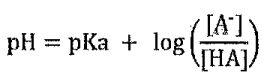 (A) 4.50 (B) 4.76 (C) 5.00 (D) 5.32 (E) 5.54